
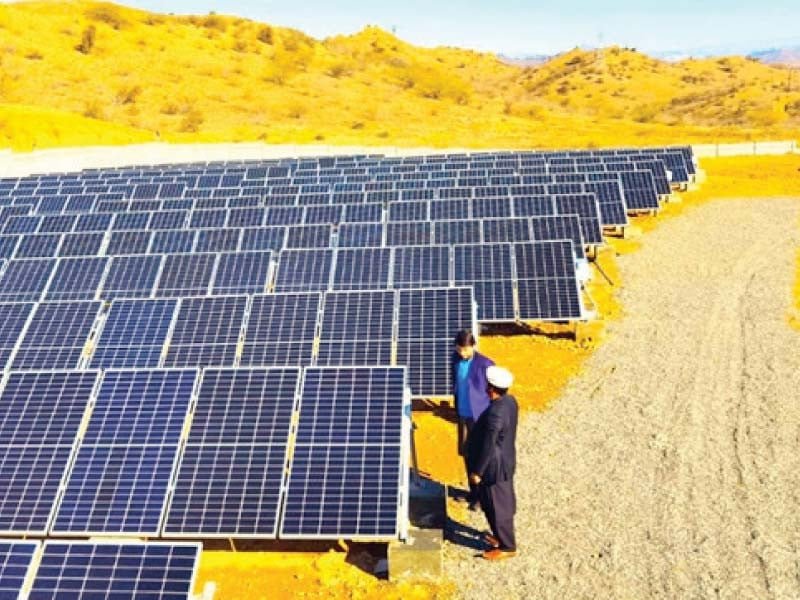
KARACHI: A World Bank review has given the $93.1 million Sindh Solar Energy Project a “moderately unsatisfactory” rating because none of its three large solar plants was finished by the time the project closed in July 2025.
The World Bank’s Independent Evaluation Group said the project aimed to build 400 megawatts (MW) of large solar power plants and 20 MW of smaller solar systems. In the end, it delivered just 35 MW.
The group said the large plants were delayed by slow land allocation, slow approvals for connecting to the power grid, poor coordination between provincial and federal authorities, and weak capacity to handle purchasing and management.
The project prepared three sites: 120 MW in Karachi at Deh Halkani and Ban Murad, 150 MW in Karachi at Deh Mitaghar, and 50 MW at Manjhand in Jamshoro.
Private companies were chosen through competitive bidding for the two Karachi sites, and construction work began, but progress later stopped. The Manjhand site never reached the bidding stage because grid approvals were delayed, and it was eventually dropped.
The review also questioned how the project measured success. It said the original goal, measuring power capacity built, did not match the project’s real purpose, which was to encourage private investment in solar power. Even using a different measure, the plants started added up to only 320 MW, below the 400 MW target.
Smaller solar systems did much better. The project installed 35 MW of solar panels on public buildings, beating its 20 MW target by 75 percent. It also put solar power in 33 important health facilities and installed batteries at public buildings hit by power cuts.
About 1,010,598 people gained new or better access to electricity. That is roughly 84 percent of the 1.2 million target.
The project also far exceeded its goal for helping women-led households, reaching 76,241 against a target of 4,000. The review said this was partly because subsidies went to the poorest households, and many of them were headed by women.
The World Bank approved the project in June 2018, and it began in June 2019. It was meant to end in September 2023 but was extended by about 22 months because of weak project management, purchasing problems and the Covid-19 pandemic.
The project was first expected to cost $105 million: $100 million from the World Bank’s International Development Association and $5 million from the Sindh government. A drop in the value of the Pakistani rupee cut the World Bank money to about $93 million. Sindh paid only $2 million of its $5 million share.
The review rated the project’s results and its value for money as “modest.” Still, it estimated the project’s economic return at 29.8 percent, with a net economic value of $278.3 million.
The review said future provincial energy projects need clear ways for federal and provincial governments to work together, especially when federal approvals, such as grid connections, are essential.