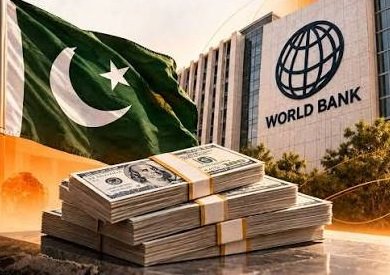
Pakistan stands to receive $600 million from the World Bank under a proposed five-year program, but the money comes with conditions: the country would need to remove wheat and sugar from the Import/Export Order, 2022, open urea imports to greater private-sector participation, and tear down regulatory barriers to investment and trade.
The proposal, outlined in official documents, is called the Pakistan Bold Reforms for Investment-Driven Growth and Employment program — BRIDGE for short. It is designed to tackle the structural problems that have held private investment to roughly 10% of GDP, less than half the rate of regional peers, and kept foreign direct investment at about 0.6% of GDP.
The stakes are significant. The World Bank’s project document puts the total cost of the program at $1.193 billion, with the bank contributing $600 million and the government $593.38 million. Most of that — $1.173 billion — would be results-based, with a $20 million technical assistance component. Approval is proposed for January 2027.
The program reflects Pakistan’s push to move beyond macroeconomic stabilization and toward growth driven by private investment and exports. The bank pointed to a costly and complex regulatory environment, limited access to finance, high trade costs and a mismatch between workers’ skills and employers’ needs as the main obstacles holding back investment and productivity.
Coordinated by the Ministry of Finance, the program would work across three fronts.
The first is cutting regulatory, financial and trade barriers. That means getting the Pakistan Business Portal running as a one-stop digital shop for business approvals, passing a modernized Investment Act to strengthen investor protection and transparency, adopting a unified corporate insolvency law and a dedicated factoring law, and getting the Export-Import Bank of Pakistan fully operational with a banking license and internationally compliant export credit and guarantee products. Trade facilitation reforms would aim to shorten import and export clearance times and expand internationally recognized accreditation.
The second front targets agribusiness and therapeutic goods, including pharmaceuticals. The program proposes a single national system for approving seed varieties, greater private-sector participation in urea imports, and removal of wheat and sugar from the Import/Export Order 2022 to deregulate both sectors and draw in private investment. For drug exporters, it would support the Drug Regulatory Authority of Pakistan in reaching World Health Organization Regulatory Maturity Level 3 status and joining the Pharmaceutical Inspection Co-operation Scheme — steps meant to open doors to regulated international markets and multilateral procurement.
The third front focuses on closing the gap between what workers can do and what the market needs. A national Labor Market Information System would link government databases, vocational qualifications would be strengthened, and digital migration services expanded. Global Skills Partnership agreements would create structured overseas employment pathways for workers holding internationally recognized qualifications.
The bank noted that more than 3 million Pakistanis enter the labor market every year, making it essential that investment translates into productive jobs. Women are a priority beneficiary group across all three areas.
The program aligns with the government’s URAAN Pakistan economic transformation plan and supports the goal of raising private investment to 15% of GDP by 2035. Progress would be measured through indicators on business registrations, access to financing, trade-clearance times, international accreditation and vocational qualifications.