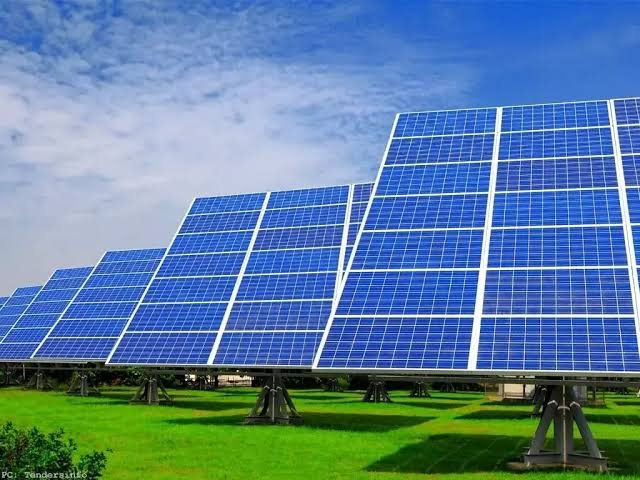
ISLAMABAD: Pakistan’s power regulator has published draft regulations to govern standalone solar electric power systems in areas where extending the national grid is not economically viable, opening a 30-day public comment period.
The National Electric Power Regulatory Authority published the draft Standalone Electric Power System (Pilot Projects) Regulations, 2026, under Section 47(3) of the Regulation of Generation, Transmission and Distribution of Electric Power Act, 1997. Comments may be sent to the NEPRA registrar within 30 days of publication.
The regulations would allow the federal or provincial governments, with the consent of the local distribution company, to notify schemes permitting self-contained power systems — generation facilities with or without energy storage — that supply electricity to a premises without any direct or indirect connection to the national or provincial grid.
Under the draft, the geographical area covered by a notified scheme would automatically be excluded from the service territory of the host distribution licensee and the supplier of last resort. The distribution company could de-energize an eligible consumer’s connection only after the standalone system is installed.
Pilot projects would be limited to two per licensee, or more if the authority approves a sponsoring government’s request. They could only be launched in areas with persistently high distribution losses, poor cost recovery, inadequate service quality, remote locations or where network costs are not economically justified.
Each scheme would be required to specify its objective, covered area and feeders, implementation timeline and agency, cost-sharing arrangements, public benefits, safety measures, consumer consultation, service levels including fault repair timelines, and a plan for reconnecting the area to the grid if the scheme is discontinued.
The systems would be financed in full or in part by the sponsoring government through grants, subsidies or other resources. Those costs would not be included in any licensee’s revenue requirement for tariff determinations.
Implementing agencies would report to NEPRA three months after a scheme takes effect on implementation progress, consumer response and satisfaction, administrative feasibility and system reliability. The authority would assess each pilot project after one year.
Licensees would have 30 days from the regulations taking force to submit proposed licence modifications. They would also be required to assess the implications of any scheme for their licensed business, including pending privatization transactions, and to devise a mechanism for recovering outstanding arrears.
The draft requires standalone systems to meet technical and safety standards in applicable documents and provincial electrical inspection requirements. Implementing agencies could not charge consumers anything beyond what the scheme specifies, and both agencies and licensees would be required to protect consumers’ personal data.
NEPRA said it may issue directions to resolve difficulties in implementing the regulations.