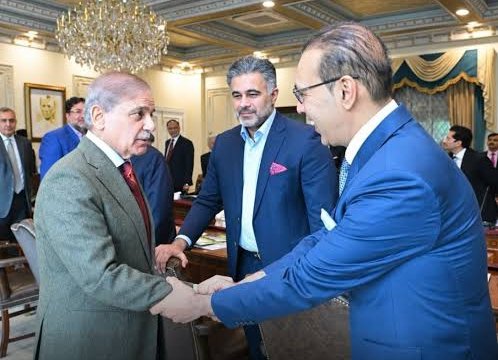
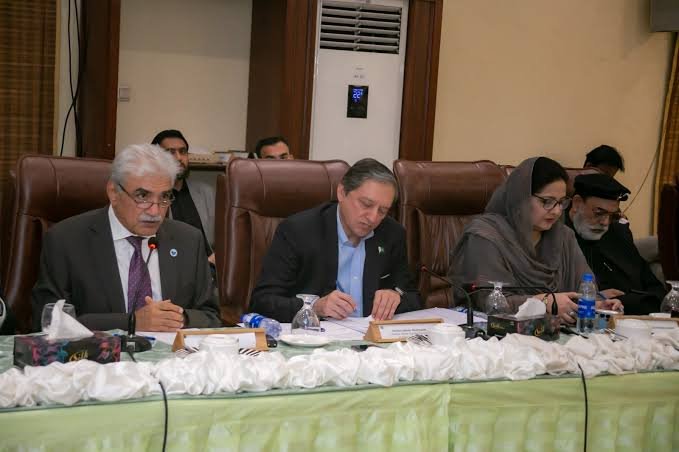
KARACHI: A delegation of the Senate Standing Committee on Finance and Revenue visited the Karachi Chamber of Commerce and Industry on Thursday, where lawmakers urged the business community to engage with parliamentary committees year-round and submit research-based budget proposals two to three months before the budget formulation process.
Sen. Saleem Mandviwalla, chairman of the committee, said genuine recommendations from the business community would be taken up with the government for consideration. He noted that budget preparations generally begin in March, while business representatives often approach policymakers in June, when the budget is largely finalized. He proposed that KCCI establish a dedicated think tank to conduct budget research, prepare a shadow budget and submit evidence-based recommendations in March or April to facilitate meaningful pre-budget consultations.
Mandviwalla said the committee’s intervention had helped eliminate about 120 billion rupees in unnecessary annual government spending under the Pakistan Remittance Initiative. He also cited the committee’s efforts to address foreign exchange outflows of $300 million to $400 million annually on domestic rupee-based transactions processed through international card networks, as well as ending compulsory SMS notification charges imposed by banks without customers’ consent. He said the interventions demonstrated the importance of parliamentary oversight in identifying financial leakages, conserving foreign exchange and protecting public interests.
Sen. Anusha Rahman Ahmad Khan, chairperson of the Senate Standing Committee on Commerce, acknowledged Pakistan’s economic challenges but highlighted improvements in key indicators despite global geopolitical and economic uncertainty. She said foreign exchange reserves had risen above $27 billion, inflation had declined from 32% to 11.5%, and the policy rate had fallen from 23.5% to 12%. She credited Prime Minister Shehbaz Sharif and his economic team and noted that Pakistan had maintained fuel availability despite its dependence on imported petroleum products and international supply-side pressures.
Anusha Rahman said economic stabilization required continued reforms, technological advancement and stronger public-private cooperation. Referring to ongoing work on the auto policy and promotion of electric vehicles, she said such initiatives could facilitate technology adoption, address climate concerns and reduce the country’s fuel burden. She invited KCCI to submit detailed recommendations for improving free trade agreements and said about 400 billion rupees in tax relief and benefits had been extended to businesses under the federal budget despite IMF-related constraints. She assured the business community that parliamentary committees were willing to work with stakeholders to address their concerns and facilitate reforms.
Zubair Motiwala, chairman of the Businessmen Group, proposed commissioning a comprehensive industrial competitiveness survey through an internationally reputed independent agency to compare Pakistan’s production costs with six competing economies: India, Sri Lanka, Thailand, Cambodia, Bangladesh and Vietnam. The study would examine electricity and gas tariffs, labor costs, interest rates and other major industrial cost components to identify Pakistan’s competitive disadvantages and formulate evidence-based recommendations for the government before the next budget.
Citing the disparity between Pakistan’s textile exports of about $16 billion to $17 billion and Bangladesh’s exports of around $54 billion, Motiwala stressed that even an 8% to 18% difference in production costs could significantly affect international competitiveness. He offered the full cooperation of the Businessmen Group and the business community, including financial support for the proposed survey, and urged Mandviwalla to facilitate the initiative so its findings could provide a credible basis for industrial and economic policy reforms.
KCCI President Talat Mahmood welcomed the delegation and described the business community as a vital fourth pillar of the state, emphasizing that the private sector was central to employment generation, tax collection and sustaining economic activity. He urged the Senate Finance Committee to increase the income tax rebate for research and development undertaken by researchers and faculty members from 25% to 75%, with the benefit directed toward institutions engaged in research to promote innovation, productivity and exports.
Talat Mahmood also called for extending tax exemption certificates for nonprofit organizations from six to 12 months to at least three years, alongside their timely issuance, and for removing additional sales tax imposed on their K-Electric bills while retaining applicable regular sales tax.
Highlighting the importance of preventing recurring fire tragedies, he demanded complete exemption from customs duties on all firefighting and fire safety equipment to encourage widespread installation in commercial markets, shops and industrial establishments. Referring to the Gul Plaza, Bolton Market and Cooperative Market incidents, he said preventive safety measures must receive greater attention alongside compensation for affected traders.
The parliamentary delegation acknowledged the concerns raised by KCCI members and expressed willingness to maintain regular engagement with the chamber. Mandviwalla also indicated that a meeting of the Senate Standing Committee on Commerce could be arranged in Karachi to discuss trade-related issues directly with the business community.
The meeting concluded with an emphasis on stronger institutional coordination, evidence-based policymaking and sustained public-private engagement to address business constraints, restore industrial competitiveness, increase exports and support Pakistan’s economic growth.