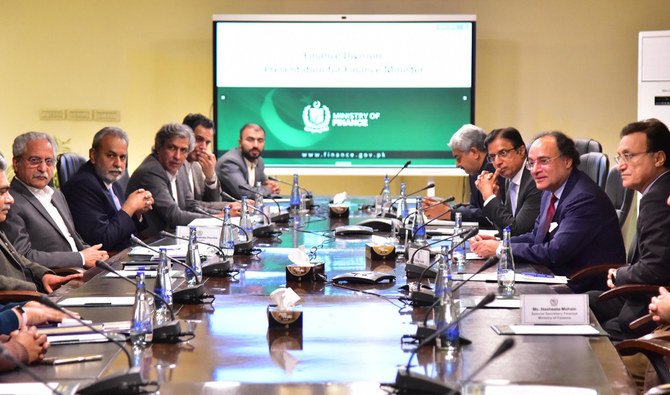
Prime Minister Shehbaz Sharif has constituted eight special working groups comprising prominent business figures to help revive Pakistan’s economy. The purpose of these groups is to formulate policy recommendations for economic recovery; however, these proposals will be considered within the framework of the Memorandum on Economic and Financial Policies (MEFP) agreed upon with the International Monetary Fund (IMF).
Minister of State for Finance Bilal Azhar Kayani, addressing a press conference, announced that progress in the privatization of Pakistan International Airlines (PIA) is expected next month. He emphasized the need for further reforms to improve the business environment, reduce tax rates, and lower electricity tariffs. He added that export-led growth can provide a sustainable foundation for the economy and help reduce reliance on IMF programs.
Kayani noted that over the past one and a half years, significant signs of economic improvement have emerged. During the fiscal year 2024–25, revenues increased by 26%, while inflation fell from 23% to 4.5%. The Federal Board of Revenue’s (FBR) tax-to-GDP ratio rose from 8.8% to about 10.3%. He further revealed that, for the first time in 14 years, Pakistan recorded a current account surplus — the largest in 22 years — which contributed to stabilizing foreign exchange reserves.
The minister stated that the policy rate was reduced from 22% to 11% as a result of controlling inflation. He highlighted that the government achieved the primary balance target without introducing any mini-budget last year. The privatization of First Women Bank has been completed, while the privatization process of power distribution companies (DISCOs) is ongoing.
Kayani shared that Prime Minister Shehbaz Sharif recently held a three-hour-long meeting with the business community to seek proposals for boosting exports and strengthening the economy. Based on those discussions, multiple working groups have been formed to prepare recommendations on income tax, customs tariffs, energy, railways, ports, agriculture, and industry. All these groups are being led by private sector experts.
The working groups are expected to submit their recommendations by November 15, after which they will be presented to the Prime Minister. The government’s goals include transforming agriculture into an export-oriented sector, reducing taxes and energy costs, and ensuring sustainable growth.
Regarding railway projects, Kayani stated that both sections of the ML-1 project are targeted for completion by 2028, with the Karachi–Rohri section scheduled to be completed by December 2028. The Asian Development Bank (ADB) is expected to provide $2 billion in financing for the project. He added that with the start of mining operations in Reko Diq, work on upgrading the railway line will also accelerate.
Bilal Kayani reaffirmed that the government is committed to promoting foreign investment and providing a business-friendly environment. He emphasized that the current economic stability is the result of joint efforts by all institutions, and the government remains focused on implementing coordinated policy measures to ensure lasting economic recovery.