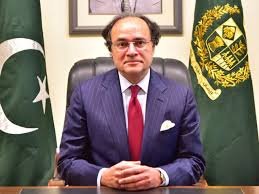
He made these remarks while addressing members of the Federation of Pakistan Chambers of Commerce and Industry (FPCCI).
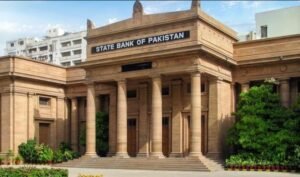
The finance minister announced that the formulation of tax policy has been separated from the Federal Board of Revenue (FBR) and transferred to the Ministry of Finance. From the next fiscal year, the national budget will be prepared not by the FBR but by the new Tax Policy Office. He added that this step would address long-standing concerns of the business community regarding inconsistencies in policy. Tax reforms, he said, are being implemented in consultation with the business sector.
Aurangzeb stated that the government aims to achieve export-led economic growth, urging every sector to contribute to exports. “Whether it is 2%, 5%, or 10%, each sector must export to remain competitive,” he stressed. The finance minister reaffirmed the government’s commitment to achieving sustainable development.
Under the direction of Prime Minister Shehbaz Sharif, eight new working groups have been established to tackle challenges faced by Pakistan’s industries and exports. These groups comprise representatives from industry, government officials, and members of the Special Investment Facilitation Council (SIFC). Aurangzeb suggested that chambers of commerce should also be included in these consultative groups.
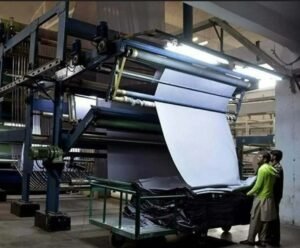
He further revealed that tariffs on industrial raw materials and intermediate goods will be reduced to boost exports. He highlighted that the textile sector remains the backbone of Pakistan’s exports, while the IT and pharmaceutical sectors have shown remarkable growth in recent years.
Regarding fiscal matters, the finance minister said that the provincial shares in the federal divisible pool will be reviewed in the upcoming meeting of the National Finance Commission (NFC).
Speaking about the Reko Diq project, Aurangzeb said operations are expected to begin in 2028, with the country’s first export from the project valued at approximately $2.8 billion. He described Reko Diq as a “milestone for Pakistan’s economy.”
Concluding his remarks, he said that macroeconomic stability and favorable geopolitical conditions have created a unique opportunity for Pakistan to accelerate economic growth and attract greater foreign investment.