
Pakistan has blocked an attempt to import Afghan-origin fresh fruits through Iran, a move aimed at preventing the misuse of trade concessions and maintaining the suspension of direct bilateral trade with Afghanistan.
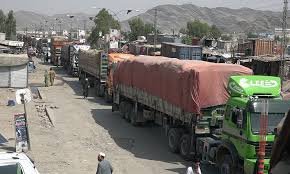
According to sources, more than 5,500 Afghan transit containers are currently stuck in Pakistan due to the closure of international borders. Despite Kabul’s efforts to explore alternative trade routes, the situation highlights Afghanistan’s continued dependence on Pakistan for access to global markets.
In a parallel development, Pakistan has decided to allow Uzbekistan to move five cargo consignments via air and 29 containers through China to protect Central Asian states from disruptions caused by the ongoing suspension of regional trade. Under the international convention signed by regional countries, Uzbekistan will airlift urgently required goods while the remaining cargo will transit through China.
Afghanistan relies heavily on neighboring countries for access to seaports to support its export economy. Border closures have severely affected Afghan exporters, particularly farmers who depend on selling fresh fruits and vegetables in Pakistan and regional markets. Perishable exports such as fresh fruits, vegetables, and dry fruits require short and low-cost routes—longer routes increase both transport costs and the risk of spoilage.
Customs authorities revealed that an attempt was made to exploit the Early Harvest Program to bring Afghan-origin goods into Pakistan via Iran. On 8 November, an importer attempted to bring a consignment of around 23 million tons of fresh fruits through Iran and applied for duty concessions under the Early Harvest Program at Taftan Customs.
The importer’s clearing agent presented a plant protection import permit along with Afghan invoices, bill of lading, export documents, and a phytosanitary certificate. However, customs authorities argued that the Early Harvest Program was designed to benefit farmers of both participating countries—and since there is currently no bilateral trade between Pakistan and Afghanistan, the consignment was denied entry.
Sources added that the more than 5,500 containers destined for Afghanistan are stuck either on highways or at Karachi ports. Approximately 4,650 containers remain at seaports and land ports, with their clearance halted due to border closures. Although Pakistan has not suspended the Afghanistan Transit Trade Agreement, customs authorities have paused clearances to avoid congestion at border points.
Analysts note that alternative routes through Iran or Central Asia are not economically viable for Afghanistan at present. Transporting goods via Iran’s Chabahar Port or through Uzbekistan and Turkmenistan would be financially unsustainable in the short to medium term, with transportation costs expected to rise by 30 to 50 percent.
The suspension of Afghan imports has had a limited impact on Pakistan’s domestic inflation. According to the Pakistan Bureau of Statistics, by 6 November, weekly inflation decreased by 0.6 percent, with notable drops in prices: tomatoes down 38%, onions down 5%, and garlic down 3.3%.