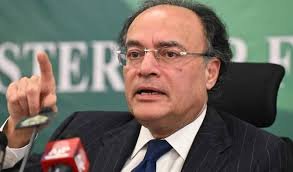
Federal Minister for Finance and Revenue Muhammad Aurangzeb has announced that the government is initiating an evidence-based review to rationalize tariffs under a broad structural reform strategy aimed at stabilizing the economy and supporting the industrial sector.
Speaking at the Pakistan Business Council’s “Dialogue on the Economy 2025” yesterday, he said that a comprehensive analysis will be carried out to make import and export tariffs more logical, aligned, and consistent with national economic goals, enabling industries to grow on sustainable foundations.
Predicting an economic growth rate of 3.5% for the current year, the finance minister said the rate could reach 4% in the next two to three years, while medium-term economic growth could rise to 6–7% with continued improvement in agriculture, manufacturing, and services. He added that the inaugural meeting of the 11th National Finance Commission Award will be held on December 4, and ongoing engagement with provinces will further strengthen cooperation under the national financial arrangement.
Aurangzeb acknowledged that high taxes, expensive energy, and the elevated cost of financing are creating difficulties for the business community, but assured that relief will be provided in phases. He revealed that Prime Minister Shehbaz Sharif has approved the abolition of the export surcharge and has handed over oversight of the Export Development Fund to the private sector.
He stated that the government’s focus has now shifted from policy design to implementation, and major reforms are underway through a comprehensive plan for digitizing the taxation system. Tax policy authority has been transferred from the FBR to the Ministry of Finance, where a Tax Policy Office and Advisory Council are being established — initially comprising academics, to be followed by private-sector representatives.
Discussing expenditure rationalization, the finance minister said that more than half of the federal ministries have completed their review, and the elimination of 54,000 vacant posts has saved the government Rs 56 billion annually. The merger or closure of certain ministries and institutions has also been confirmed. He emphasized that “Digital Pakistan” remains a top government priority, with efforts focused on promoting digital payments, digitizing government transactions, and enhancing financial inclusion to shift the cash-based economy toward a documented system.
On debt management, he said that the Debt Management Office is being upgraded to international standards, increasing the average debt maturity to four years and reducing refinancing risk. Improved debt management, he said, could save the government up to one trillion rupees. He mentioned the new contributory pension scheme, launched in July 2024, under which more than 9,000 new government employees have been enrolled, with the same system planned for the armed forces next year.
Aurangzeb announced that Pakistan will issue its first Panda Bond before the upcoming Chinese New Year, while the Pakistan Virtual Asset Regulatory Authority has been activated for the digital and crypto economy.
He said that security, macroeconomic stability, and profit repatriation are essential for foreign investment. He added that renewed global investor interest in the energy, mining, and technology sectors is a positive sign for the country’s economic recovery.