
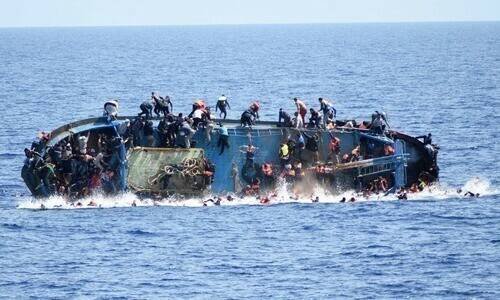
The ongoing departmental accountability process in the FIA, following the Greece ship incident, has exposed internal weaknesses and negligence within the agency. The Secretary of Interior (Narcotics Control) has dismissed multiple officers and staff posted at Karachi, Faisalabad, and Multan airports and imposed other penalties, highlighting both professional negligence and systemic shortcomings within the organization.
According to key FIA Islamabad sources, more than 400 Pakistanis lost their lives along with their dreams in the Greece ship tragedy. Based on investigations and reports of inquiry committees over the past two and a half years, several officers, including deputy directors, have been dismissed. Over the last two years, more than 100 subordinate officers, including constables, head constables, ASIs, and sub-inspectors, have also been removed. However, it took two and a half years for this accountability process to reach higher offices, indicating the need for faster and more transparent action against facilitators within government agencies.
Specifically, due to negligence in the 2023 Greece ship incident, a Deputy Director and two Assistant Directors at Karachi Airport were dismissed. An Assistant Director at Faisalabad Airport was also removed on similar grounds. At Multan Airport, a Deputy Director was penalized with a three-year reduction in rank and salary for alleged links to human smugglers. Additionally, two senior investigators were dismissed for poor investigation, and an Assistant Database Administrator was removed for negligence. Four Assistant Directors and an Inspector were penalized with salary reductions of one to three years for absenteeism, negligence, and flawed investigations. At Islamabad Airport, an Assistant Director and an Inspector received censures for mistreating a detainee.
The Secretary of Interior upheld the dismissals of six sub-inspectors, one ASI, three head constables, and five constables, while rejecting appeals for absenteeism from LDC staff. The promotion freezes on a superintendent and a sub-inspector were converted to censure penalties.
These actions come at a time when questions have been raised about the FIA’s internal systems and officer performance. The Greece ship tragedy highlighted major failures in internal monitoring, training, and accountability standards.
Additionally, growing incidents of unnecessary off-loading of passengers at major airports had caused public outrage. Viral social media reports, sometimes exaggerated or false, further increased public concern.
In response, the FIA has established special Immigration Information Centers at Lahore, Islamabad, Karachi, Peshawar, and Sialkot. These centers aim to provide comprehensive guidance on visa documents, travel permits, passport procedures, protector clearances, and entry/exit policies. They are intended to facilitate passengers and reduce unnecessary disruptions and disorder at airports.
These measures are particularly necessary due to the rise in illegal or inappropriate travel by transit visa holders and work visa travelers to Europe, which had increased responsibilities for airport officers. Some travelers, misled by agents, were unaware of their visa type or travel details, endangering personal safety and affecting Pakistan’s international reputation.
The new Information Centers will allow passengers to prepare their documents accurately, minimizing disputes, disorder, and off-loading incidents at airports.
However, the dismissals after the Greece ship incident point not only to individual negligence but also to broader administrative gaps. Poor supervision and alleged links to human smuggling at Karachi, Faisalabad, and Multan airports reveal internal vulnerabilities, which are particularly dangerous as human trafficking and illegal movement threaten national security and Pakistan’s international image.
The FIA’s actions, including the dismissals and penalties, send a clear message that negligence and poor investigations will not be tolerated. The establishment of the Immigration Information Centers indicates a proactive step toward preventing such incidents in the future. Social media reactions after the Greece ship tragedy had also increased pressure on the agency, prompting strict action against officers and staff linked to this network.