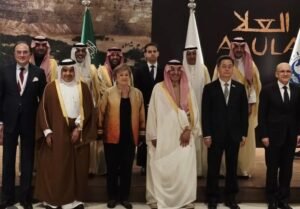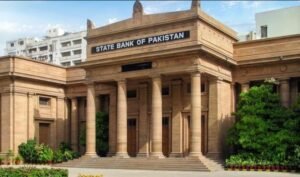

A high-level consultative meeting was held at the Ministry of Finance to discuss the National Digital Asset Framework and review a detailed proposal on the collateralization of virtual assets, aimed at increasing M1 (money supply). The ultimate goal is to make billions of dollars—currently parked in offshore stablecoins and entirely outside the formal economy—available for Pakistan’s domestic economy.
The meeting was co-chaired by Federal Minister for Finance & Revenue Muhammad Aurangzeb and PVARA Chairman Bilal bin Saqib to advance work and discussions on Pakistan’s National Digital Asset Framework.
The State Bank Governor, presidents and executives of major domestic banks, and global CEO of the cryptocurrency exchange Binance, Richard Teng, also attended.
According to the working paper presented, Pakistanis collectively hold significant amounts of USD-linked stablecoins (USDT/USDC). However, these assets neither contribute to domestic liquidity nor assist in credit creation.
The proposed framework argues that if users are allowed to register through regulated exchanges and the State Bank of Pakistan is granted real-time visibility of users’ stablecoin balances, then banks can confidently use these assets as collateral—thereby increasing M1, reducing liquidity pressures, and supporting economic activity.
It was also proposed that regulated stablecoin reporting would not only allow banks to accurately assess borrowing capacity but could also channel billions of dollars back into the formal banking system, increasing GDP and strengthening Pakistan’s external account.
The meeting reviewed upcoming steps for establishing a safe, modern, and regulated digital asset ecosystem in Pakistan. Participants emphasized the need for effective on/off-ramp infrastructure, strict compliance, market transparency, and strong integration with the banking system.
Senator Muhammad Aurangzeb said the government is committed to creating a modern, secure, and forward-thinking regulatory environment that promotes technology while safeguarding national economic interests. He stressed the importance of close cooperation between government bodies, licensed global exchanges, and domestic banks to modernize the payments system, improve financial inclusion, and align with global standards.
The Finance Minister noted that the growing use of digital assets in Pakistan reflects an irreversible global trend. Bringing citizens’ virtual assets under regulated oversight—without giving them legal tender status—will be essential for financial transparency and asset reporting.
The meeting also discussed opportunities to reduce the cost of Pakistan’s annual $38 billion remittance inflows through blockchain-based payment systems. Leaders underscored the importance of developing blockchain and Web3 talent to meet future job market needs.
Officials also talked about the potential tokenization of government bonds and sovereign debt, which could increase liquidity, broaden investor access, and position Pakistan as a regional leader in blockchain finance.
The Finance Minister added that a regulated environment would ensure market stability, consumer confidence, and increased investment while enabling the growth of licensed local platforms.
In conclusion, PVARA Chairman Bilal bin Saqib said Pakistan has a historic opportunity not just to adopt global best practices but to help shape the new global direction. He highlighted the importance of effective regulatory harmonization, bank-exchange collaboration, and modern financial infrastructure.