The Executive Board of the International Monetary Fund (IMF) yesterday approved the disbursement of $1.2 billion for Pakistan, which will be provided under the Extended Fund Facility (EFF) and the Resilience and Sustainability Facility (RSF). Following this approval, about $1 billion will be immediately available to Pakistan under the EFF, while $200 million will be accessible under the RSF. According to the IMF, this decision brings total disbursements under both programs to $3.3 billion.
In its statement, the IMF said that Pakistan has made significant progress in reforms under the EFF, helping maintain economic stability despite a difficult global environment and the recent devastating floods. Fiscal performance remained strong, and a primary surplus of 1.3% was recorded in FY2025, which was in line with the target. Although inflation increased, the IMF stated that the rise was temporary and caused by disruptions in food supply. Foreign exchange reserves increased to $14.5 billion, a considerable improvement compared to last year, with further growth expected in the next fiscal year.
According to reports, after the Executive Board meeting, Deputy Managing Director Nigel Clarke said that Pakistan’s economic reforms have played a key role in maintaining macroeconomic stability during difficult circumstances. He noted that improvements in economic growth, declining inflation expectations, and reductions in fiscal and external deficits are positive signs. However, given global uncertainties, Pakistan must accelerate the pace of reforms through prudent policies to ensure sustainable, private-sector–led growth.
He said that maintaining the primary balance target for FY2026 while meeting urgent relief needs of recent flood victims reflects the government’s commitment to fiscal discipline. Simplifying tax policy, broadening the tax net, and increasing revenues, he added, are essential not only for fiscal stability but also for creating space for climate resilience, social protection, human capital development, and public investment.
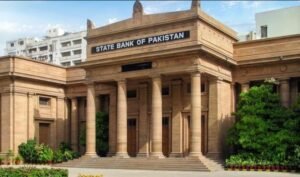
Nigel Clarke further stated that tight monetary policy has played a vital role in reducing inflation and should be maintained. He urged the State Bank to further strengthen the foreign exchange market and keep the exchange rate flexible to better absorb economic shocks.
Highlighting energy-sector reforms as essential for Pakistan’s competitiveness, he said tariff adjustments have helped reduce the flow of circular debt. However, addressing issues in production costs, inefficiencies in distribution, and challenges in the gas and electricity sectors remains unavoidable.