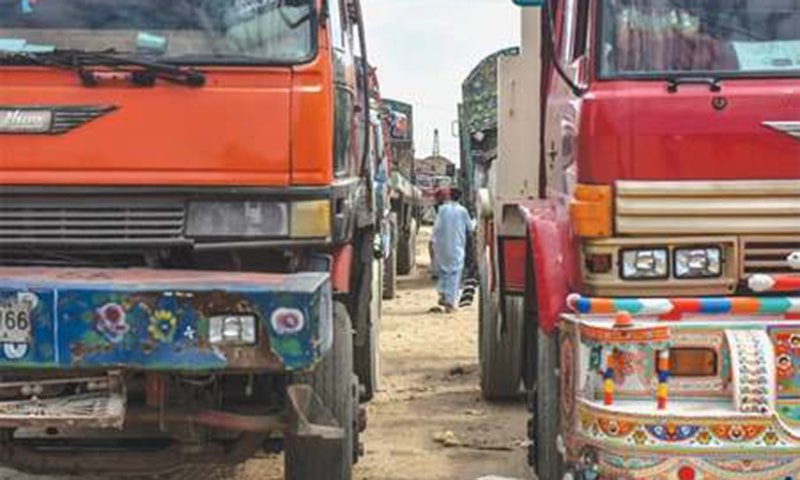
Due to an ongoing strike by freight transporters, fears are growing of shortages of essential food items and a rise in prices, as the transportation of goods to Karachi from across the country has been completely suspended since December 8.
According to details, the strike by cargo vehicle operators continues in Karachi, while the supply of goods from other cities to the metropolis remains halted. Transporters say they have been financially devastated due to arbitrary fines, excessive taxes, increased extortion, looting, and other issues in Sindh and Punjab. They announced that the strike, which began on December 8, will continue for an indefinite period.
Transporters have blamed the Sindh government for the situation, alleging that it is not even willing to engage in dialogue with affected stakeholders. They stated that during riots, strikes, and protests, goods-laden trucks are often used to block roads, resulting in losses for which no compensation is paid. In addition, rampant banditry in riverine (katcha) areas—where drivers and staff are robbed, kidnapped for ransom, or even killed—has become a major concern.
It is worth noting that Karachi is considered the economic hub of Pakistan. Goods arriving from Iran, Afghanistan, and China through the city’s three ports, industries, commercial centers, and land routes are distributed across the country. According to sources, between 10,000 and 11,000 cargo vehicles enter and exit Karachi daily. The central Hawksbay truck terminal remains a key hub for the continuous transportation of goods from ports and other locations, operating as part of a nationwide 24-hour logistics network.
Sources said that over the past few months, bandits in riverine areas have intensified attacks on cargo vehicles, looting goods, killing drivers and staff, kidnapping them for ransom, and damaging vehicles. Meanwhile, during protests and strikes in Punjab and Khyber Pakhtunkhwa, cargo trucks along with their crews have been detained on highways for days. Despite protests, transporters say they were never compensated for their losses.
On the other hand, over the past one and a half years, toll taxes have reportedly increased by up to 120 times, while fines have risen by 300 to 400 times. In addition, motor vehicle tax, professional tax, registration fees, transfer fees, permit fees, fitness fees, driving license fees, income tax duties, auto parts prices, engine oil costs, import duties, and fuel prices have all continued to rise.
Due to motorway closures, goods-laden trucks have remained stranded on highways for days. After looting goods worth billions of rupees, dozens of vehicles worth crores were reportedly set on fire. Transporters also allege that at checkpoints, officials break container seals under the pretext of inspection, damaging the goods inside. Extortion at multiple points along transport routes remains rampant.
Transporters further alleged that within Sindh, excise police and Pakistan Customs often declare vehicles “suspicious” without cause and demand large sums of money in the name of searches, while motorway police also harass them separately. According to transporters, 10-wheeler trucks make up 60 to 65 percent of the country’s cargo fleet. They claim that SHA authorities had assured permission for 10-wheelers to carry up to 37 tons, but this has not yet been implemented.
They also said that in Karachi, heavy bribes are allegedly collected from cargo vehicles entering and exiting commercial centers and industrial zones during daytime hours to allow movement. Adding to their woes, the Punjab government decided on November 25, 2025, to amend the Motor Vehicle Ordinance, under which thousands of cargo vehicles were impounded at police stations and cases registered against them.
Transporter leaders stated that after 60 years, new laws are being introduced, prompting the strike that has continued since December 8. No negotiations have taken place so far. They warned that the shutdown of the cargo transport network will lead to shortages of food items and other goods, along with a significant increase in prices.