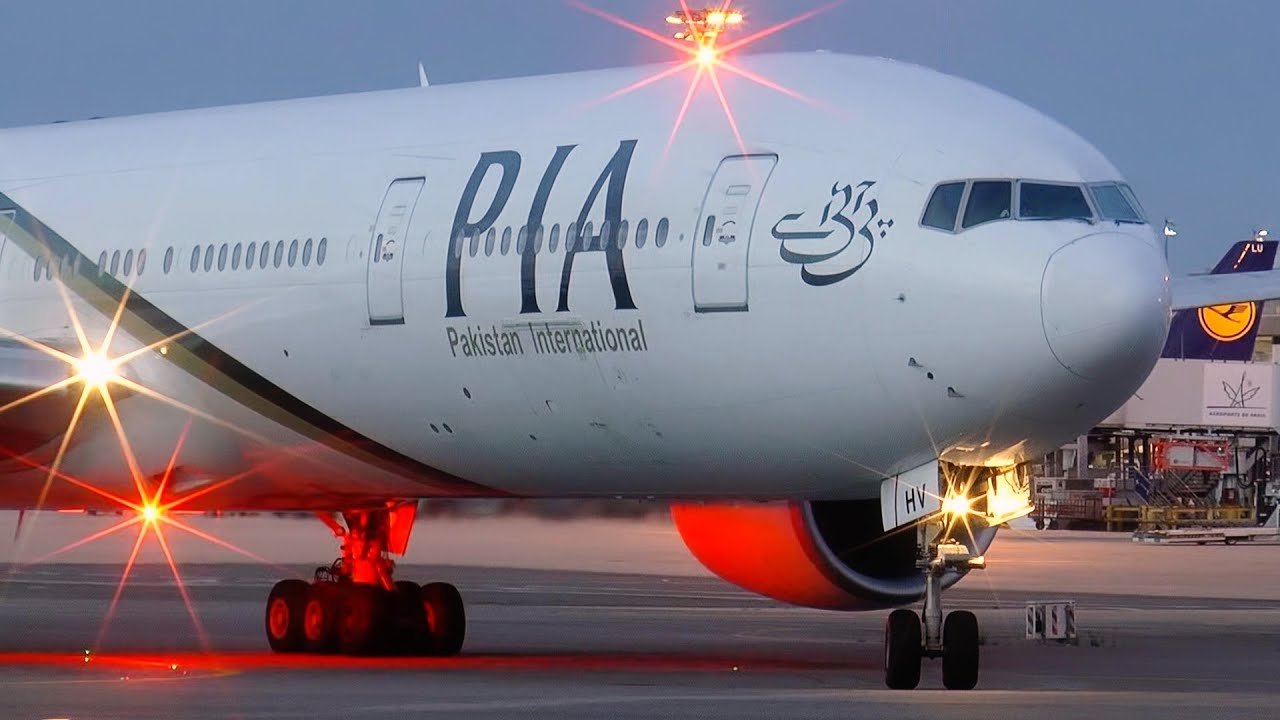
The privatization of Pakistan International Airlines (PIA) does not, by itself, signify the elimination of the financial burden associated with the national carrier, according to renowned Pakistani-American economist and Princeton University professor Atif Mian.
According to sources, Atif Mian wrote on his website atifmian.com on Saturday that some commentators are celebrating the sale as if PIA’s privatization will automatically halt its financial losses. He stressed that this is not the case.
The economist pointed out that the government has retained ownership of the holding company, which still carries approximately Rs650 billion in legacy net liabilities. In other words, while the transaction brings the government around Rs55 billion in value, it also leaves it holding nearly Rs650 billion in old liabilities. The net result is that about Rs600 billion in losses remain on the government’s balance sheet.
Atif Mian said this negative balance is significant. Even with a conservative estimate of a 10 percent average cost of capital, servicing this old debt would result in annual financial costs of roughly Rs60 billion. Whether privatization takes place or not, the government will continue to pay the price for past mismanagement.
However, he cautioned against dismissing the transaction as merely cosmetic. According to Mian, a pessimist might look at these figures and conclude that privatization is akin to rearranging the seats on a sinking ship—an exercise in futility—but such a view would be overly harsh.
He described the deal as a step in the right direction, as it removes the debt overhang from the operational airline and places it under a new management that has stronger incentives to improve performance.
Mian added that while the government continues to carry around Rs600 billion in liabilities, better decisions today should not be avoided because of past mistakes. Freeing the airline from old debt and allowing it to operate under normal market conditions was the correct move, even if it does not erase historical losses.
He further emphasized that the government is, in effect, a stakeholder in the broader economy. When companies grow, the government benefits through the tax system—via higher wages, increased sales, and ultimately profits—all of which contribute to higher public revenues.
According to Atif Mian, the best outcome after privatization is not the immediate disappearance of the Rs600 billion burden, but rather the emergence of a healthy aviation sector that grows fast enough over time to help service and reduce that debt.
He also highlighted that structural risks remain a serious concern despite these efforts. Pakistan has undertaken privatization before—banking being a prominent example—yet growth has remained persistently slow in subsequent years.
This does not mean privatization failed, he noted, but it underscores a critical point: a change in ownership cannot substitute for a broader enabling environment that supports investment, competition, and productivity. Without such an ecosystem, privatization becomes merely a transaction rather than a transformative reform.