
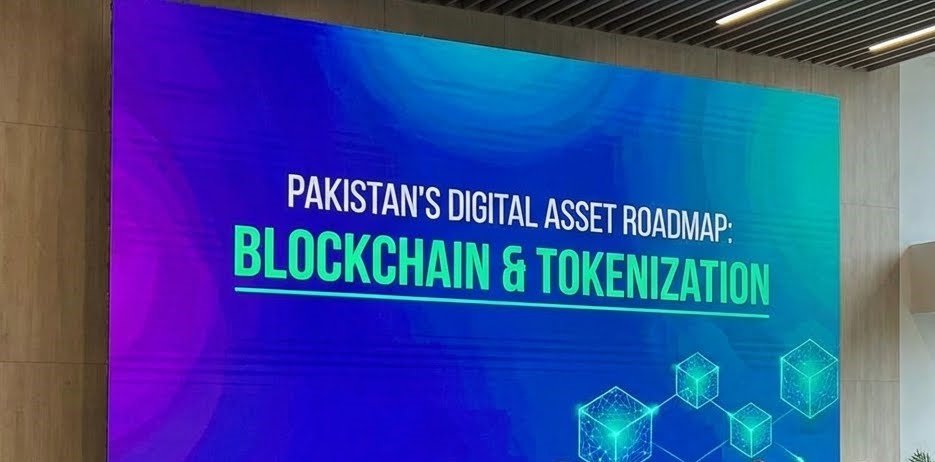
Pakistan is considering adopting tokenization and blockchain technology to expand its capital markets and attract investment.
According to sources, a high-level business delegation met Federal Finance Minister Muhammad Aurangzeb on Wednesday. The delegation was led by Syed Zeeshan Shah, Chairman of the global real estate and venture capital group, One Group.
Sources said the meeting focused on emerging global trends in tokenization, artificial intelligence, blockchain, and digital infrastructure, as well as potential collaboration to support ongoing reforms in Pakistan’s financial sector and its digital transformation agenda. The delegation expressed strong interest in partnering with the government and offered technical expertise, advisory support, and capacity-building in areas such as real-world asset tokenization, blockchain-based platforms, AI-driven solutions, and advanced digital infrastructure.
The delegation also highlighted globally recognized best practices and private-sector innovations that could help improve transparency, efficiency, investor access, and financial inclusion in Pakistan, while fully respecting the country’s legal and regulatory framework.
These discussions took place in the context of Pakistan’s recent initiatives aimed at responsibly assessing the adoption of emerging financial technologies, including efforts at the government level to evaluate compliant blockchain infrastructure for public and real-world assets.
According to sources, both sides agreed that if used wisely, these technologies could help expand capital markets, attract international investment, and support sustainable economic growth. Muhammad Aurangzeb welcomed the delegation’s interest and appreciated their desire to engage constructively with Pakistan. He noted that Pakistan is actively engaging with credible international partners to evaluate new technologies in order to strengthen its financial system.
Sources added that the Federal Minister emphasized that any future partnership would be guided by national priorities, transparency, and applicable laws and policies.