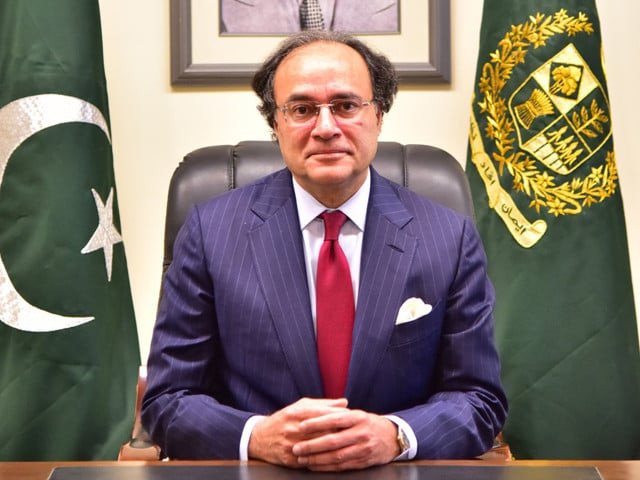
Federal Minister for Finance Muhammad Aurangzeb acknowledged that due to high tax rates and expensive electricity and gas tariffs, some multinational companies were forced to leave Pakistan.
According to sources, he made these remarks while addressing the Pakistan Policy Dialogue yesterday. The event was hosted by the Policy Research and Advisory Council (PRAC), with Corporate Pakistan Group (CPG) and Nutshell Group as strategic partners, while the Ministry of Commerce and the Trade Development Authority of Pakistan (TDAP) participated as founding partners. Bank Alfalah and BankIslami supported the dialogue as platinum and gold partners, respectively.
The finance minister pointed out that if companies continue to rely on business models from past decades, they will not be able to cope with current economic challenges. Citing the examples of Nestlé and Unilever, he said that by using local raw materials, these companies managed to keep costs low and expand into exports, and other investors can achieve success by following a similar approach.
He stated that over the past 18 months, 20 new foreign investors have entered Pakistan, including Google, Aramco, Wafi Energy, and Turkish Petroleum. He added that key reform measures such as the restructuring of the Federal Board of Revenue (FBR) and the transition toward digital payments are underway, and by June, all government payments will be made online.
According to him, annual remittances are expected to reach $41 billion, which will serve as the backbone of foreign exchange reserves. He further noted that inefficiency in public sector institutions is costing the country up to one trillion rupees annually. Therefore, the government is shutting down loss-making, subsidy-dependent institutions to ensure more effective use of resources.
The finance minister also said that within five years, import duties, including regulatory duties, will be eliminated so that industries can produce at lower costs and move toward direct exports.
Minister for Planning Ahsan Iqbal said that the path to economic development passes through political stability, and no economy can progress without continuity of policies. Referring to defense exports, he termed the export of JF-17 fighter jets as an important development and stressed that Pakistan must make exports a national priority to ensure economic security.
Meanwhile, Minister for Climate Change Musadik Malik stated that national development is not possible without ending subsidies given to a few influential groups. He emphasized that Pakistan cannot become a productive economy without the democratic distribution of capital and providing opportunities to the youth.