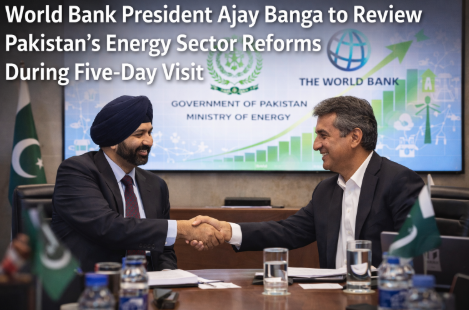
Ahead of World Bank President Ajay Banga’s five day visit to Pakistan (January 31 to February 4, 2026), the agenda between the government and the international institution is being finalized. During the visit, the World Bank President and his team will hold a joint meeting on February 2 with Finance Minister Senator Mohammad Aurangzeb, Minister of Energy Sardar Owais Ahmed Khan Laghari, Minister of Petroleum and Natural Resources Ali Pervaiz Malik, and FBR Chairman Rashid Mehmood Langrial.
According to sources, the Economic Affairs Division has instructed the Ministry of Energy, Ministry of Finance, and FBR to prepare eight minute presentations for each topic for the World Bank President. In this regard, the World Bank delegation met with Minister of Energy Sardar Owais Ahmed Khan Laghari yesterday. The meeting was led by Osman Dewan, Vice President for the Middle East, North Africa, Afghanistan, and Pakistan region.
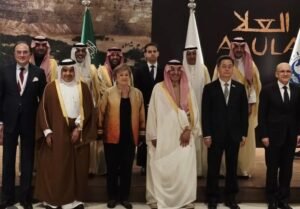
During the same period, the Minister of Energy also met with Islamic Development Bank Vice President (Operations) Dr. Rami Ahmed, where strategies for improving sustainability and efficiency in Pakistan’s energy sector were discussed. The Minister of Energy welcomed the World Bank delegation, thanked them for historical cooperation in development projects, and stated that his recent visit to the World Bank headquarters highlighted the importance of strong partnerships to tackle energy challenges.
The World Bank team emphasized the importance of a reliable and affordable energy system, while Dr. Rami Ahmed outlined opportunities for joint initiatives to promote sustainable energy. The Minister reaffirmed his commitment to energy sector reforms and presented details of ongoing projects in generation, transmission, and distribution. These projects include phasing out 8,000 megawatts of expensive electricity generation plants under IGCEP, which is expected to save approximately 17 billion dollars in future consumer costs.
Additional measures include improving the performance of distribution companies, reducing circular debt by 78 billion rupees, shifting imported coal plants to Thar’s local coal, and resolving transmission bottlenecks. Other initiatives cover tariff incentives for industrial and agricultural consumers, integration of captive power into the national grid, incentives for electric vehicles, and reforms in net metering regulations.
Under market and governance reforms, the wholesale market is being liberalized to promote competition, and the five year national electricity plan is being implemented to reorganize key institutions. The Ministry’s technical unit, PPMC, is overseeing reforms and providing analytical support, while IT tools are strengthening consumer facilitation and monitoring. The Minister emphasized the transition to clean energy sources for long term energy security and economic prosperity.
Sources said that Osman Dewan and Dr. Rami Ahmed appreciated Pakistan’s reform efforts in the energy sector and lauded the Ministry’s strong commitment. They expressed satisfaction with the practical and timely implementation of reforms and affirmed that these measures will strengthen Pakistan’s energy system, boost investor confidence, and promote long term economic growth.