
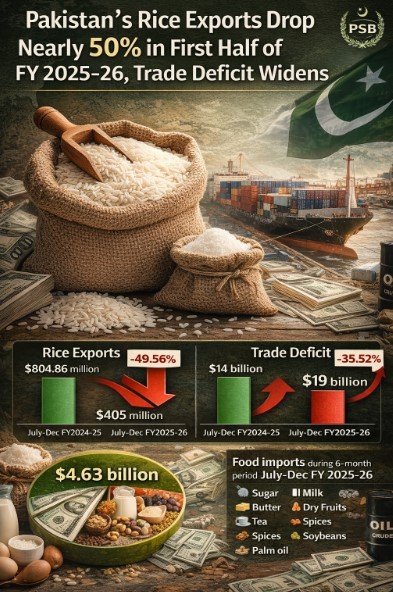
Pakistan’s rice exports fell sharply by 49.56 percent in the first half of fiscal year 2025–26, dropping to just 405 million dollars, compared to 804.86 million dollars in the same period last year.
According to the Pakistan Bureau of Statistics, Basmati rice exports during the period stood at 170.249 million dollars, down from 359.78 million dollars last year, showing a decline of 52.68 percent. Similarly, IRRI-6 rice exports decreased to 37.24 million dollars from 47.7 million dollars, a fall of 21.93 percent. Pakistan did not export any sugar this year, whereas sugar exports in the same period last year earned 145.85 million dollars.
Overall food exports declined by 22.06 percent, falling from 2.910 billion dollars to 2.268 billion dollars. The textile sector also recorded negative growth of 8.56 percent. In December 2025, major export items included knitwear, readymade garments, bedwear, other varieties of rice, cotton cloth, towels, made-up articles, cotton yarn, petroleum products, and meat.
Official data shows that during July to December 2025, Pakistan’s imports amounted to 34.5 billion dollars, while exports remained at only 15 billion dollars. As a result, the trade deficit increased by 35.52 percent, exceeding 19 billion dollars. This situation contradicts claims of export-led growth and highlights structural weaknesses in the country’s trade framework.
Food imports during the six-month period stood at 4.63 billion dollars, including sugar, milk, butter, dry fruits, tea, spices, soybeans, and palm oil. Around 90 billion rupees were spent on tea imports alone. During the same period, smartphone imports were close to one billion dollars, while mobile accessories were also imported in large volumes.
Machinery imports increased by 16 percent to 5 billion dollars, while the import bill for petroleum products reached 8 billion dollars. Heavy imports of agricultural chemicals, fertilizers, metals, textile raw materials, and other industrial goods further added to import pressure. According to the document, regional instability, especially the suspension of trade with Afghanistan, is a major reason behind the decline in exports.