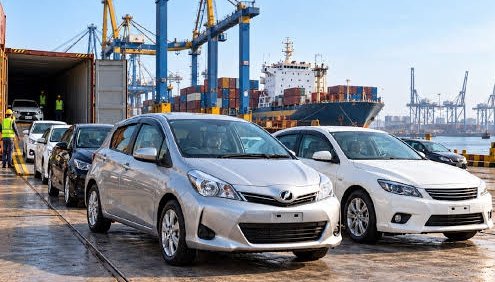
KARACHI: The chairman of the All Pakistan Car Dealers & Importers Association called for an end to discriminatory policies favoring a handful of automobile assemblers, saying regulated commercial imports of used vehicles would promote competition and benefit consumers.
Mian Shoaib Ahmed, leading an APCDIA delegation to the Karachi Chamber of Commerce & Industry, said prolonged protection for local assemblers had failed to deliver improvements in vehicle quality, localization and export performance. He urged a competitive, transparent automotive market in which manufacturers improve products and efficiency rather than rely on restrictive policies.
Ahmed welcomed progress toward commercial imports of used vehicles and thanked KCCI for its support and correspondence with the prime minister and government officials on the issue. He said implementation had faced delays despite an earlier notification, but the association was now moving to import vehicles commercially under its own business name through formal banking channels, subject to inspection, quality and regulatory requirements.
He also highlighted the proposed Pakistan Car and Machinery Zones project, which aims to bring used vehicles and machinery into Pakistan for refurbishment, value addition and re-export. Drawing comparisons with Dubai’s transit-trade model, Ahmed said Pakistan could leverage its strategic location, skilled workforce and competitive labor costs to build a similar export-oriented ecosystem in Karachi. He said the project was approaching its final stages and aimed to attract about $400 million in foreign direct investment.
Zubair Motiwala, chairman of the Businessmen Group, joined the meeting via Zoom and strongly advocated regulated used-vehicle imports, saying they would give consumers access to better-quality cars at affordable prices, generate government revenue, conserve foreign exchange and introduce competition into the domestic market.
Motiwala cautioned that the automobile manufacturing lobby was influential and well-resourced, making it essential for dealers to pursue their case with strong, evidence-based arguments. He said consumers deserved better-quality vehicles and pointed to concerns about the durability, performance and standards of some locally assembled cars.
He emphasized that the used-car market serves consumers who cannot afford expensive new vehicles and should not be deprived of affordable alternatives. He maintained that used-car imports would not necessarily shut down local manufacturing because the two markets serve different customer segments, and he highlighted the thousands of jobs tied to car dealerships and related businesses.
Motiwala assured the delegation that KCCI would continue to take up the association’s legitimate concerns with relevant authorities.
KCCI President Talat Mahmood reaffirmed the chamber’s commitment to supporting APCDIA and stressed continued engagement with the government to ensure effective implementation of the notified policy. He invited the delegation to share recommendations with KCCI’s Executive Committee and assured the association that the chamber would remain engaged in pursuing its legitimate business concerns.