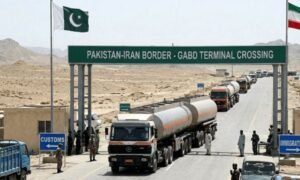
KARACHI: Pakistan’s tax authority, the Federal Board of Revenue, has issued new safety rules for Customs officers who work to stop smuggling, with a strong focus on protecting the lives of staff working in dangerous parts of the country, especially Khyber Pakhtunkhwa and Balochistan.
The order was signed by Shakir Muhammad, Secretary (Enforcement) at the Customs Operations Wing, and applies to both Mobile Squads that go out to catch smugglers and staff stationed at check posts across Pakistan. Under the new rules, Mobile Squads must wait at their designated check posts and can only go out if they have solid information about smugglers or if a senior officer, at least an Assistant Collector of Customs, approves the operation. Before every operation, the team leader must plan carefully, checking intelligence, choosing the right time and place, arranging enough staff and vehicles, and preparing for emergencies.
The team leader must also get a fresh threat report from the Collectorate’s intelligence desk or from Police or FC intelligence before finalizing the plan, so they know if the route is dangerous. If the threat level changes or something happens, the team leader must tell the Collectorate control room right away. In high-risk areas, operations must only happen with help from Police, FC, or other law enforcement, and if there is no proper security and lives are at risk, the operation must not go ahead.
Squads must stay within their assigned area and route, mostly check vehicles they have specific information about, and avoid stopping for long periods in dangerous places. To avoid becoming predictable, they should change their routes, timings, and movement patterns, and should not use the same route again and again in high-risk areas. Vehicles used by Mobile Squads should have working GPS trackers and cameras if available, and every squad must keep a first-aid kit. The team leader must know where the nearest trauma hospital is and how to get an injured person there quickly. If there is an armed attack, saving lives comes first, and the squad should call Police or FC for help and move to a safe place as soon as possible.
For check posts, the officer in charge is responsible for the safety of staff and government property. High-risk check posts in KP and Balochistan must have proper protection, including sandbags, outer walls with fences, barriers at the main gate, a crawl trench to stop car bombs, fencing all around, dummy cameras, and bulletproof stands. Check posts at high risk of attack must have a separate, well-protected emergency bunker. Staff must stay alert, and communication equipment, CCTV cameras, lights, and other security tools must always be working. Every squad and check post must have three backup plans, Plan A, Plan B, and Plan C, so they always have another option if the first plan fails. Unauthorized people and vehicles must not enter the check post area, and every check post must stay in contact with the Collectorate control room and the nearest Police or FC office.
Check posts with weak mobile signals or high threat must have a backup communication method, like a satellite phone or wireless or HF radio. Local staff who know the area, language, and people should handle day-to-day interactions, and any arguments or resistance should be handled calmly and patiently. If there is an attack, staff should take cover in the bunker, alert authorities, and call for help from the nearest law enforcement. Any threat, attack, or damage to security equipment must be reported to the Collector immediately.
The officer in charge of each check post must also write an evacuation plan showing safe routes and meeting points, and all staff must know the plan and their specific duties during an emergency. Practice drills must be held regularly so everyone knows what to do without confusion. A written report must be sent to the Collector within 24 hours of any security incident, including what happened, what action was taken, and any injuries or damage. Each Collectorate must review all security incidents every three months to update threat assessments and find gaps in preparation, equipment, or procedures, and the SOP itself will be reviewed every six months, or sooner if a major incident happens.
Any deviation from these rules needs prior approval from the Collector, and in an emergency, the Collector must be informed as soon as possible with reasons. The Collector must also make sure all staff on duty, including officers, wear helmets and bulletproof jackets.
The new SOP makes one thing clear: the safety of Customs officials comes first. Officials are being told not to take unnecessary risks and to always have backup plans. The FBR hopes these rules will reduce casualties and keep anti-smuggling operations effective without putting lives in unnecessary danger.