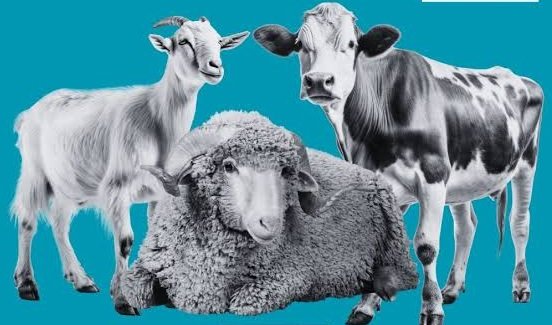
ISLAMABAD: Pakistan wants to let approved businesses bring in cattle, sheep and goats without paying import duties and taxes, as long as the animals are fattened in the country and then sold abroad, either alive or as meat. The Federal Board of Revenue, the country’s tax authority, published the draft rules on Oct. 7. Anyone who would be affected has seven days from publication in the official gazette to send objections or suggestions.
The plan adds a new section to the Customs Rules, 2001, and works in two ways:
• Track A: Businesses import live animals, fatten them, and export the same animals alive.
• Track B: Businesses import live animals, fatten them, slaughter them at a registered export plant, and export the meat and meat products.
The rules would not cover animals born in Pakistan or pure-bred breeding animals. Businesses must be registered for sales tax and income tax and must run either an approved feedlot or quarantine facility, or a registered export slaughterhouse and meat plant. They would apply online to a customs official called the Regulatory Collector, saying how many animals and how much feed they plan to import each year. The collector would have 30 days to approve or refuse after inspecting the site together with the animal health authority. Applicants would have to put up a guarantee covering the duties and taxes they would normally owe. The type of guarantee depends on the business’s customs category. Each animal would need an import permit, a veterinary health certificate and a unique ID. Animals would go straight into quarantine and be entered in a national tracking register as imported animals. They would be kept apart from Pakistani-born animals and could not be sold locally, bred or used for milk or farm work.
Cattle and buffalo would have to be exported or slaughtered within 180 days of leaving quarantine. Sheep and goats would have 120 days. Officials could grant extensions of up to 150 days in total for cattle, in special cases.
Businesses would have to insure the animals against death. Deaths of up to 3 percent of imported cattle, or 5 percent of imported sheep and goats, in a year would be forgiven. Beyond that, the business would owe duties and taxes plus a penalty, unless the deaths came from a disease outbreak, a natural disaster or a government destruction order.
Feed, vitamins, vaccines, medicines and ID tags could also be imported duty-free, but only for use on the imported animals. Operators would have to weigh each animal at least every 30 days and keep detailed records. Live animals exported under Track A would have to be the same ones that were imported, checked by an RFID chip reader at the port. Meat under Track B would have to be exported within 120 days of slaughter. Hides, offal and other by-products would have to be exported or sold locally, with duties and taxes paid, within 120 days.
Businesses could sell up to 10 percent of their imported animals, or the equivalent in meat, in Pakistan if they pay the full duties and taxes. Calves, lambs and kids born to imported animals would count as imported and must be registered within seven days. People planning to build or expand feedlots, quarantine centers or export slaughterhouses could also apply to import machinery and equipment duty-free. They would get 24 months to get the facility running, with up to 12 more months possible.
After that, they would have to export at least 80 percent of their output for five years and keep the equipment for five years. If they fall short, they would owe duties and taxes on the equipment. Businesses would file quarterly and yearly reports. Auditors could count animals using RFID readers and inspect cold storage. Officials could suspend or cancel a business’s permission if a license expires, a serious animal disease is found, the rules are broken, or animals or goods appear to have been diverted. Goods not accounted for would be taxed with a penalty.
The tax board would review the system within two years of the first approval and every two years after that.
The meat-export track, the new-facility rules and the duty-free feed and equipment would begin as soon as the notification takes effect. Exporting live animals under Track A would start only after the government’s Export Policy Order allows exports of foreign-origin animals and the board announces a date for each species. The draft says it does not remove any existing ban, restriction or condition under import and export policy, or under laws on animal quarantine, food safety, tracking or slaughter.