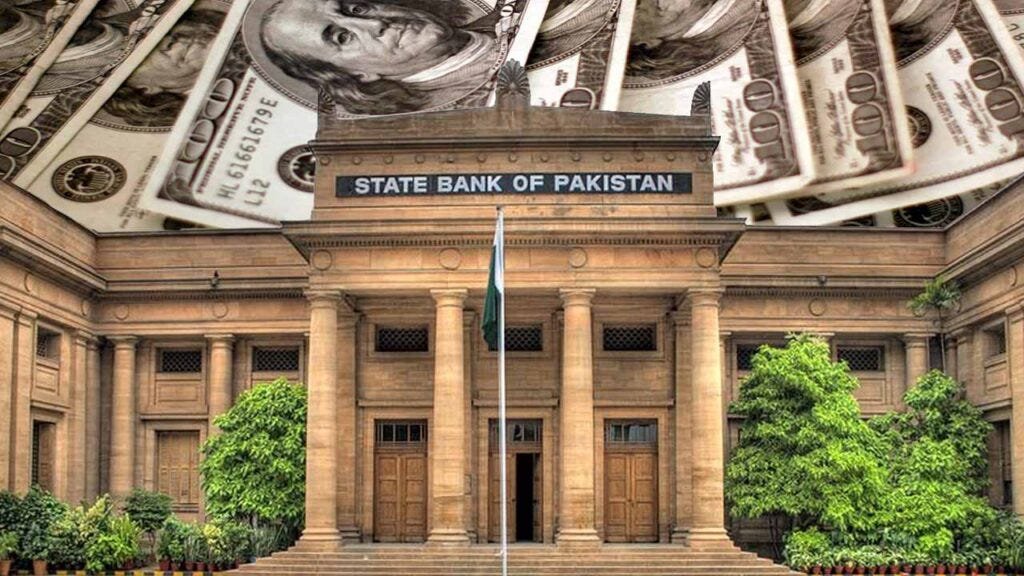
The Governor’s Annual Report is published under Section 39(1) of the State Bank of Pakistan Act, 1956 (including amendments up to January 2022), which mandates the Governor of the State Bank to submit an annual report to the Parliament on the Bank’s objectives, the conduct of monetary policy, and the state of the economy and financial system.
According to the report, the disinflation trend that began in FY24 became more pronounced during FY25.
The national Consumer Price Index (CPI) inflation averaged 4.5 percent in FY25, sharply down from 23.4 percent in FY24 and 29.2 percent in FY23 — marking one of the steepest declines in recent years.
The report highlighted that this decline was broad-based, led mainly by food inflation. Improved availability of food commodities in domestic markets and lower global food prices were key drivers behind the reduction. Energy inflation also eased significantly, benefitting from lower global oil prices, which led to downward adjustments in administered energy tariffs.
In response to the improved inflation outlook, the Monetary Policy Committee (MPC) reduced the policy rate by a cumulative 1,100 basis points between June 2024 and June 2025. However, the pace of monetary easing was moderated in the second half of FY25 due to lingering uncertainties, including persistent core inflation, evolving global tariff policies, rising geopolitical tensions, and volatility in administered energy prices.
This balanced monetary policy stance supported a notable expansion in private sector credit and a gradual recovery in economic activity, especially during the latter part of the fiscal year.
The report stated that the fiscal deficit fell to 5.4 percent of GDP — the lowest level in several years — while the primary surplus more than doubled to 2.4 percent. This fiscal consolidation complemented the monetary policy stance and helped anchor inflation expectations.
On the external front, the current account recorded a surplus for the first time in fourteen years. This improvement, combined with increased financial inflows following the IMF Extended Fund Facility program, enabled the State Bank to purchase foreign exchange from the interbank market, thereby strengthening reserves and enhancing market stability.
The report also highlighted several measures undertaken by the State Bank to support the government’s economic policy objectives. These included reforms in the exchange company sector, administrative measures to boost workers’ remittances—such as enhanced incentives for banks and targeted outreach to overseas Pakistanis—and initiatives to facilitate exporters, especially in the IT sector. These measures included higher retention limits to promote reinvestment and innovation.
Significant progress was also made in the digital payments landscape, as part of ongoing efforts to promote a cashless economy. The State Bank rolled out digital payment acceptance solutions nationwide and further digitized government payments.
The report discussed the launch of the National Financial Inclusion Strategy 2024–28, which aims to raise financial inclusion to 75 percent and reduce the gender gap to 25 percent by 2028. Initiatives such as the National Financial Education Roadmap 2025–29, the continued implementation of the Banking on Equality policy, and targeted measures to support Islamic banking, agriculture, and SME financing were also acknowledged.
Recognizing recent structural reforms—such as taxation and customs tariff reforms, deregulation of agricultural markets, and the gradual phase-out of untargeted subsidies—the report emphasized the importance of sustained structural and governance reforms to maintain price and financial stability.
Lastly, the report pointed to emerging challenges stemming from changes in global tariff policies and the impact of domestic floods. It reaffirmed that the State Bank remains vigilant, closely monitoring evolving risks and incorporating them into policy decisions to safeguard price and financial stability—both of which are essential for achieving sustainable economic growth.