ISLAMABAD: Wahdat Poultry Farm ended its first year as a listed company with rising profits but negative free cash flow, as heavy spending on a new pasteurization plant and flock expansion consumed more cash than the business generated.
The company reported negative free cash flow to the firm of 240.5 million rupees (-$859,000) in fiscal year 2026, an FCF margin of about -8.0%, according to its annual report released Oct. 15. The deficit reflects capital outlays on the pasteurization facility and other expansion projects, partly funded by the 846.4 million rupees ($3.0 million) in net proceeds from its initial public offering.
Of the 900 million rupees ($3.2 million) raised in the IPO, 407.8 million rupees ($1.5 million) has been spent so far. The largest allocation, 125.1 million rupees ($446,800), went to the pasteurization plant, which is scheduled to begin operations in March 2027. Another 110 million rupees ($392,900) went to working capital, 89.6 million rupees ($320,000) to rearing additional flock, 50 million rupees ($178,600) to repay Karandaaz Pakistan debt and 33 million rupees ($117,900) to the company’s quality-assured procurement model.
The new plant will produce pasteurized liquid egg products for bakeries, food manufacturers and food-service customers, moving the company beyond its heavy reliance on shell eggs, which accounted for 97% of revenue. Management sees the facility as a gateway to exports in the GCC and other international markets.
Profitability told a more encouraging story. Profit rose 26.6% year over year to 306.3 million rupees ($1.1 million), though 207 million rupees ($739,300) of that came from a fair value gain on the flock, up from 86 million rupees ($307,100) in FY25. Operating profit climbed 26.5% to 446.4 million rupees ($1.6 million), with operating margin improving to 14.9% from 12.6%.
Finance costs fell 20.6% to 105.7 million rupees ($377,500) after the company used IPO proceeds to pay down short-term borrowings and related-party loans. Interest-bearing debt-to-equity dropped to 0.28x from 0.54x, and equity financed 71.5% of total assets, up from 59.9%.
Still, operational strains are visible. The cash conversion cycle stretched to 94 days from 88 days on higher receivable and inventory days. Export revenue from the UAE fell 42.8% to 250.5 million rupees ($894,600) from 438.3 million rupees ($1.6 million), and Qatar sales of 16.7 million rupees ($59,600) in FY25 disappeared entirely.
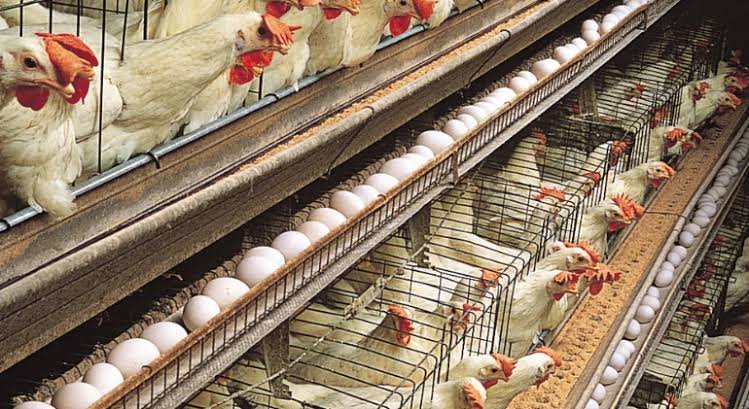
The laying flock stood at 452,437 birds against installed capacity of 430,000, while the feed mill ran at 40 tons per day against 80 tons of capacity — a 50% utilization rate that leaves room for growth if demand supports it.
Total assets grew 46.5% to 3.75 billion rupees ($13.4 million), equity rose 75.2% to 2.68 billion rupees ($9.6 million), and cash and bank balances jumped to 513.4 million rupees ($1.8 million) from 40.7 million rupees ($145,400).
The company has paid no dividends, retaining profits to fund growth. It trades at a FY26A price-to-earnings ratio of 15.4x.