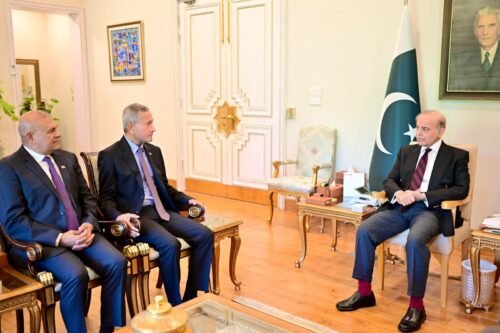
KARACHI: The Sindh government is committed to developing industrial areas, and the allocation of more than Rs9 billion in grants for industrial zones is clear evidence of that commitment, Secretary Planning and Development Capt. (Retd.) Altaf H. Sario said during a visit to the Korangi Association of Trade and Industry.
Sario emphasized that close collaboration and continuous consultation between KATI and the Planning and Development Department are essential for better urban planning and improved infrastructure in Karachi. He said development projects should be mapped while giving due importance to proposals from the industrial community so projects can be developed with the support of provincial, federal and international institutions.
The meeting was attended by KATI Deputy Patron-in-Chief Zubair Chhaya, Senior Vice President Farrukh Qandhari, KITE Ltd. CEO Saleem-uz-Zaman, Vice President Nasir Sheikh, former chairmen and presidents Junaid Naqi, Johar Qandhari and Ehteshamuddin, Senior Accounts Officer and Member Planning and Development Saqib Bashir, Chief Economist and Special Secretary Planning and Development Jawad Muzaffar, and other officials.
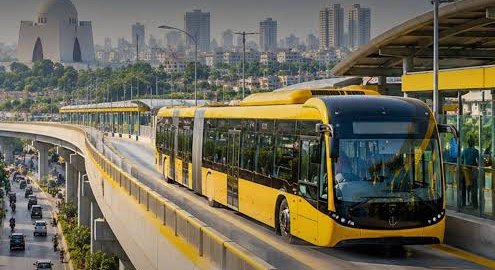
Sario said the Planning and Development Department plays a key role in planning and approving development projects, reviewing and approving projects ranging from Rs1 million to Rs100 billion. He said the Asian Development Bank’s portfolio stood at Rs1 trillion last year and had declined to Rs720 billion this year, of which Rs250 billion had been allocated for bus rapid transit projects.
He added that digitalization of departmental operations had helped bring uniformity to projects and achieve financial savings, while environmentally friendly initiatives were being prioritized under climate financing.
Chhaya said the Yellow Line project should not be launched in the industrial area until proper planning has been carried out, taking into account the concerns of industrialists and the potential impact on industrial activities. He stressed that the industrial sector cannot afford a shutdown lasting more than a day and warned that poor planning could cause serious economic losses.
He pointed out that no new project had been initiated by the Planning and Development Department in Korangi since 2023. He assured that KATI would extend its cooperation through monthly meetings to address the area’s issues, with Nasir Sheikh serving as the department’s focal person.
Chhaya also expressed concern over the inadequate drainage system, the discharge of waste into the sea, lack of coordination among relevant institutions and delays in development projects in the industrial area.
Qandhari said Karachi’s development projects, including the Korangi Causeway Bridge and Shahrah-e-Bhutto, would help improve traffic flow and strengthen industrial and commercial activities. He emphasized that the needs of industrial areas must be prioritized in development planning and that effective coordination between the government and industrialists should be ensured.
He said joint efforts by the government and the industrial community were essential for promoting industrial growth, investment, exports and employment opportunities, and stressed the importance of timely completion, quality and transparency in development projects.
Saleem-uz-Zaman said the water shortage in Korangi Industrial Area was a complex issue, which was why KITE Ltd. had been established under a public-private partnership model.
He said the Sindh government had provided a grant of Rs2 billion and had increased the allocation for the current year in recognition of the high-quality projects delivered by the organization despite its limited budget.
He emphasized that joint planning was essential to avoid conflicts between BRT and KITE Ltd. projects. He added that, following completion of the Korangi Causeway, effective planning would also be required to resolve traffic congestion at Baloch Colony Bridge and Korangi Crossing.