MULTAN: Pakistan Customs’ newly created Collectorate of Customs Enforcement, Indus has issued its first performance report. All 26 enforcement stations are now manned, and 105 smuggling cases worth Rs. 273.254 million have been booked since inception.
The Collectorate is a new anti-smuggling formation under the Federal Board of Revenue, headquartered at Custom House, Multan. It assumed charge in mid-August 2026, with jurisdiction extending 15 kilometres on either side of the River Indus and seven kilometres on either side of the Hub. Collector Umar Shafique has also briefed Prime Minister Shehbaz Sharif on its progress and challenges.
Field operations began on 15 September, when Sub-Inspectors and Sepoys were posted at the first 15 Digital and Mobile Enforcement Stations. The remaining 11 went live on 1 October, and mobile squads now patrol the riverine corridors. Fourteen of the 26 locations are existing check posts and 12 are new, including sites on the M1 and M5 motorways and the CPEC route at DI Khan–Hakla.
The full field strength of 862 officials, 92 Sub-Inspectors and 770 Sepoys, is deployed. Attock GT Road has the largest complement with 56 personnel, followed by Khushal Garh with 54 and Chashma Bridge with 49. Every station has boarding, lodging and dedicated transport for its staff.
Regional offices operate at Peshawar, Islamabad, Mianwali, Sukkur, Hyderabad and Karachi. Additional Collectors are in post at Peshawar, Multan and Hyderabad, and five Deputy Collectors lead the regions. A Control Room at Custom House, Multan receives live feeds from DES Moachko and DES Hamdard.
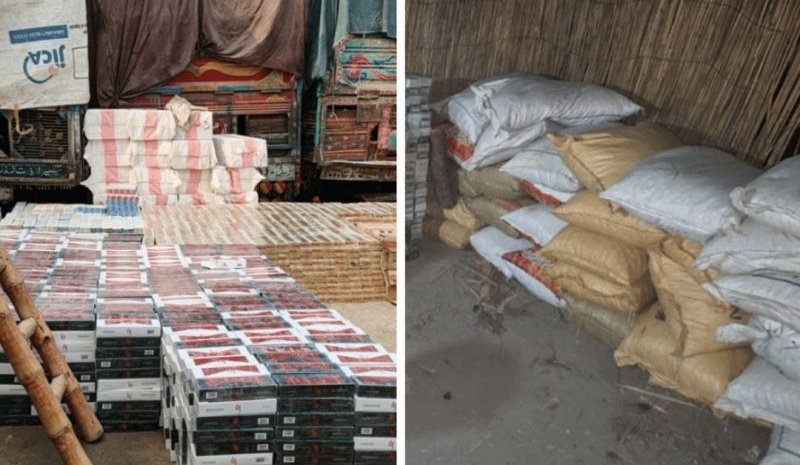
Seizures include cotton, high-speed diesel, gutka, cigarettes, tyres and betel nuts, along with kiwi, polyester cloth, raisins and figs. Two detections account for more than a third of the total value: three trucks of smuggled cotton worth Rs. 56 million at DES Ghazi Ghat, and two vehicles carrying diesel worth Rs. 41.6 million at DES Hamdard.
The Collectorate is still building capacity. It has received 48 vehicles, of which eight are in the field and 19 are in the workshop, with all expected to be deployed by the end of October. All Sub-Inspectors have completed a five-day seizure course, and training for Sepoys is being arranged with the Punjab Police Training Wing. Tenders have been floated on E-PADS, with bids opening on 16 October.
The Collectorate says it lacks the access and resources to handle appraisement matters, and so cannot effectively tackle trade-based smuggling. This form of smuggling is on the rise, as certain checks and balances have been removed for some time. It works through misdeclared imports, which a roadside checkpoint cannot detect.
The Collectorate also has no access to appraisement data in WeBOC, Customs’ clearance system, even though it holds information about attempted crimes. Field intelligence therefore cannot be checked against declaration records, which limits the Collectorate largely to intercepting goods in transit rather than tracing the networks behind them.