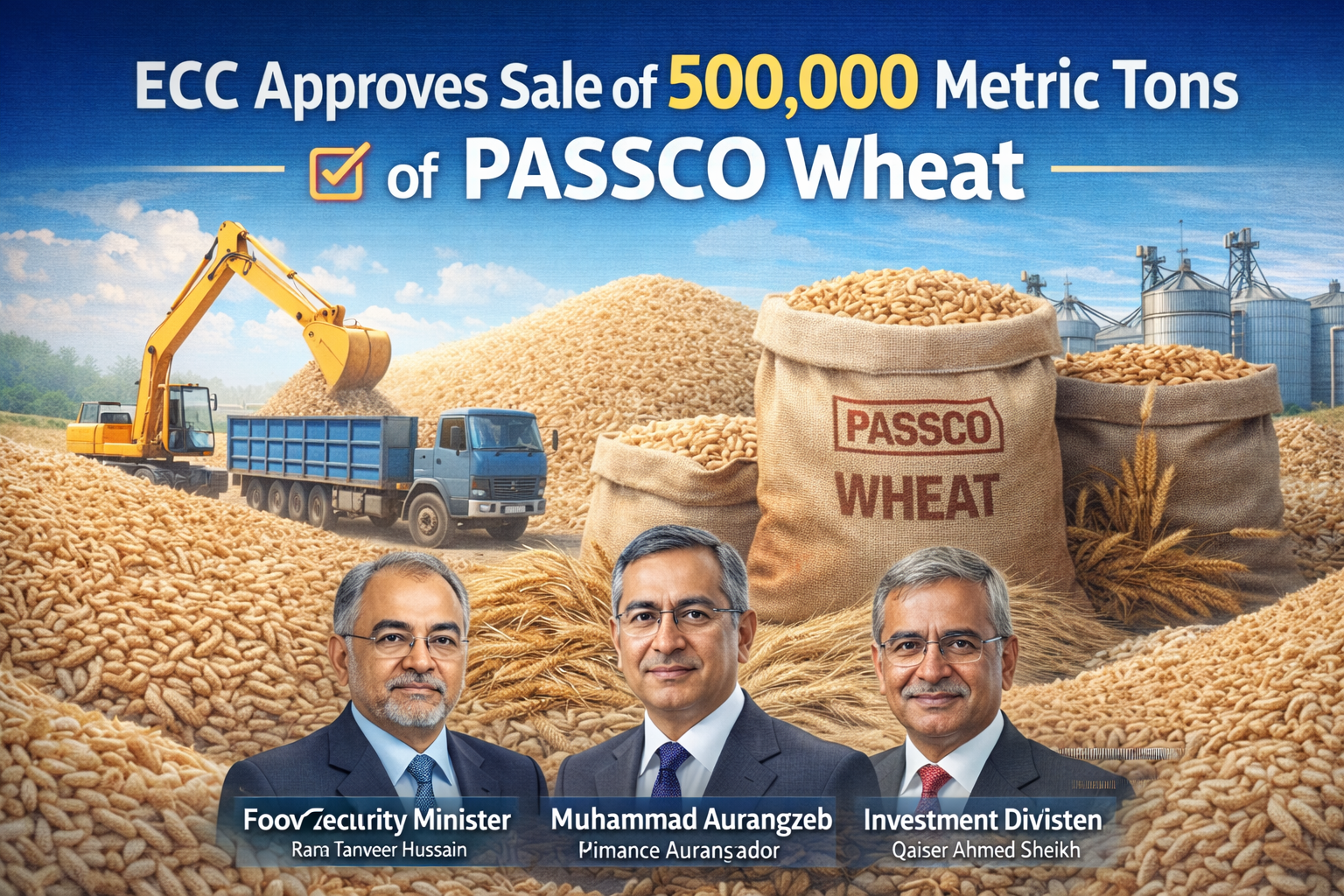
According to sources, the Cabinet’s Economic Coordination Committee (ECC) on Wednesday approved the disposal of 500,000 metric tons of wheat held by PASSCO (Pakistan Agricultural Storage and Services Corporation) through a competitive bidding process. The decision aims to manage surplus stocks, reduce warehouse storage costs, and stabilize wheat prices in the domestic market.
In addition, the committee approved the supply of 300,000 metric tons of PASSCO wheat to the Punjab Food and Consumer Protection Department to ensure a continued supply of wheat to flour mills and uninterrupted availability of affordable flour for the public.
The important ECC meeting was held at the Finance Division under the chairmanship of Finance Minister Muhammad Aurangzeb. Federal Minister for Food Security Rana Tanveer Hussain, Federal Minister for Investment Qaiser Ahmed Sheikh, and other senior officials attended the meeting. Various economic and financial matters were reviewed.
In the health sector, the committee approved a technical supplementary grant of Rs29.663 billion for the Federal Directorate of Immunization to ensure the uninterrupted procurement of vaccines and syringes under the national immunization program and to fulfill Pakistan’s international commitments on disease prevention.
In another major decision related to the agriculture sector, the ECC approved a subsidy of Rs23.42 billion on imported urea fertilizer, to be shared equally between the federal and provincial governments on a 50:50 basis. Out of this amount, Rs15 billion will be released immediately by the Finance Division, while the remaining funds will be provided subject to fiscal space.
For development projects, the ECC approved Rs1.9 billion for the Ministry of Housing and Works to improve infrastructure in Khyber Pakhtunkhwa and support the achievement of Sustainable Development Goals (SDGs). Additionally, a grant of Rs150 million was approved to meet the operational expenses of Cadet College Hasan Abdal.
Finally, the committee decided to hand over solar panels confiscated by the Federal Board of Revenue (FBR) to the Gilgit-Baltistan government to help address electricity shortages in the region and promote renewable energy.