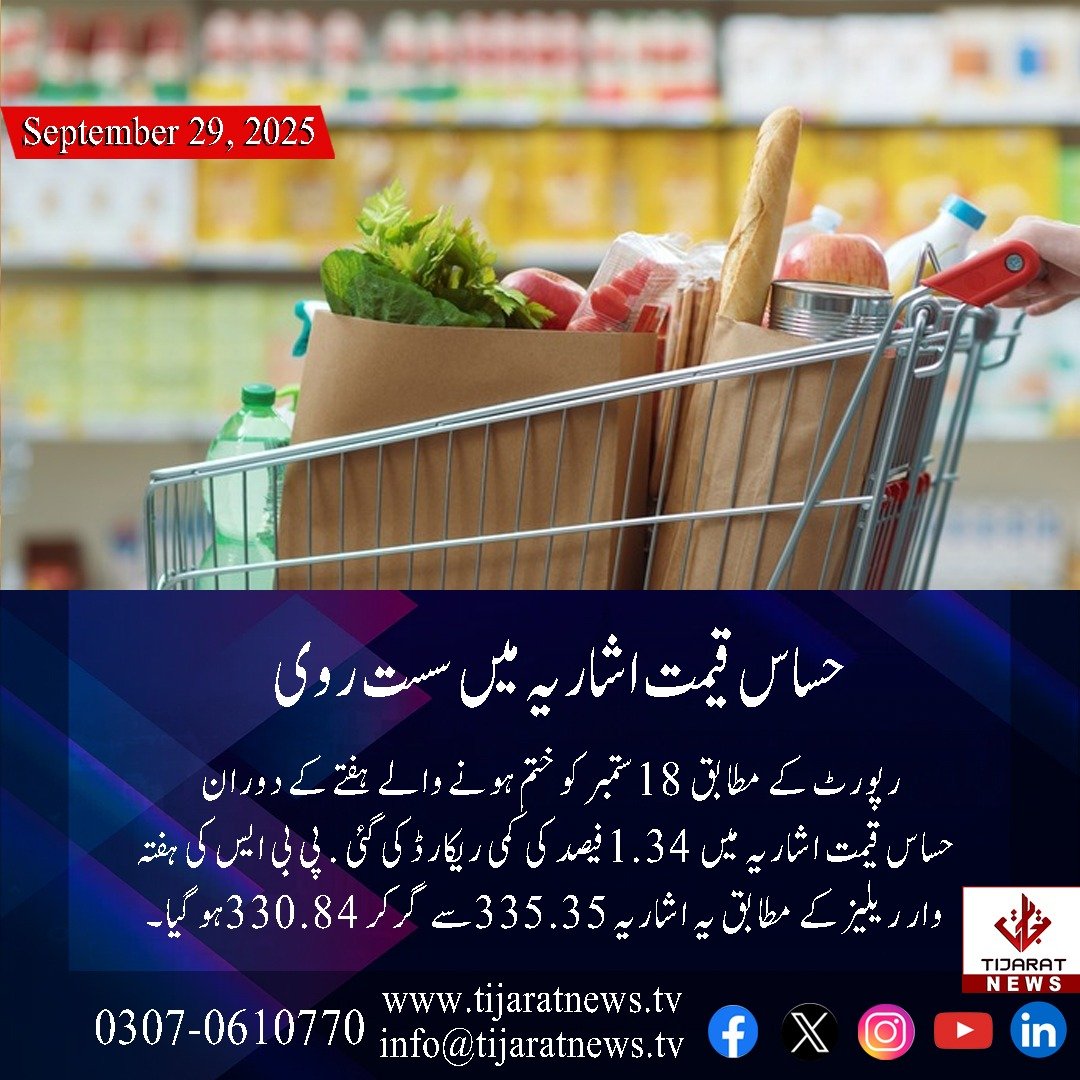
Although this decline provides temporary relief in retail inflation, it is almost entirely due to perishable goods and reduced electricity charges, while the prices of essential commodities and fuel continued to rise. When viewed in the context of Pakistan’s inflationary dynamics and monetary policy stance, the latest SPI figures raise more questions than they answer.
The breakdown of the data shows that tomato prices fell by 23 percent in a single week, chicken prices dropped by nearly 13 percent, and electricity bills were reduced by more than 6 percent. These declines in select items pulled the SPI index downward.
Meanwhile, diesel prices rose by 1 percent, egg prices climbed by nearly the same margin, and staples such as rice, sugar, ghee, and meat also recorded increases. Unlike perishables, these items form the backbone of household spending.
A one-week drop in tomato prices cannot offset the mounting pressure from rising wheat flour, fuel, and sugar costs.
On a yearly basis, the SPI still stands 4.17 percent higher. For households, this carries more weight than weekly fluctuations, as it reflects a long-term decline in real incomes.
It is precisely these retail-level goods that dominate household budgets. The low-income segment bears the heaviest burden, as their expenditures are concentrated on food and fuel.