
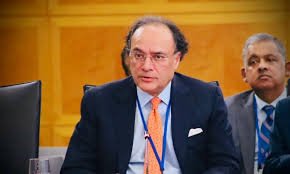
Finance Minister Muhammad Aurangzeb said that the federal government will finalize by December 31 the action plan for implementing the 15 priority recommendations presented by the IMF for eliminating corruption and improving governance in various departments.
The finance minister informed the National Assembly’s Standing Committee on Finance that short-term and long-term recommendations to control corruption in government departments will be implemented over the next two to three years.
Calling the IMF report a critical document for both the government and parliament, he read out the 15 major recommendations included in the report and stated that most of them have either been implemented or are in progress. These recommendations relate to governance, taxation, corruption, regulation, and the rule of law.
He said that there are seven key areas that need focused attention. For example, supplementary grants have been abolished, and now only technical grants (reallocation of funds) are issued along with budget adjustments.
The finance minister stated that the Civil Services Bill has also been presented, and from next year the asset declarations of government employees will be made public on the official website.
He said that if the intention was to delay the report, the government would not have funded it. The procedure was that the draft report was shared with 30 government departments for their input, and after incorporating their suggestions, the final report was prepared.
According to the finance minister, the government is preparing an action plan by the end of December to implement the reforms and measures recommended in the IMF’s Technical Assistance Report (Governance and Corruption Diagnostic Assessment 2025).
He added that preparing such a technical assistance–based report was requested by the government itself, and nearly 20 countries around the world have undergone similar assessments. He noted that the UK, the US, and other OECD countries have also voluntarily prepared such reports. The IMF report is part of Pakistan’s ongoing structural reforms, and the IMF has acknowledged Pakistan’s progress in various sectors.
When the committee chairman, Syed Naveed Qamar, asked why the GCD report was delayed by a few months, the finance minister replied that feedback from 30 departments on various aspects of the report was necessary, which took time. However, the government eventually approved the publication of the report.
In its written response, the Ministry of Finance informed the committee that the report has been published on its website following the prime minister’s approval. The report contains 423 paragraphs and 92 recommendations (15 priority and 77 guidance-level). It focuses on seven areas, including the nature and extent of corruption, fiscal governance (revenue collection, tax administration, public financial management), market regulation, financial sector supervision, anti-money laundering, counter-terrorist financing measures, rule of law, and anti-corruption policies.
The 15 major recommendations include setting priorities for public institutions, mandatory implementation of an e-government procurement system within 12 months, publication of annual reports of investments made through the SIFC, establishing a federal business regulation database under SECP, elimination of unnecessary laws, a review mechanism for new regulations, publication of asset declarations of senior officials, and introducing a risk-based verification system. The finance secretary told the committee that the asset declarations of government employees will be uploaded next year.
The finance minister added that this report was commissioned by the government itself, and the government is moving the process forward.
He said nearly 100 meetings were held in which more than 30 institutions participated. The report covers seven thematic areas. He explained that it is a technical document meant to advance institutional reforms—similar to the structural reforms currently underway. The report identifies weaknesses that have existed in the system for decades.
He said the IMF report records all progress made over the past 18 months, and the IMF has praised Pakistan’s performance in several areas. The finance minister said that the action plan based on structural weaknesses will be shared with everyone.
The standing committee also reviewed amendments related to Alternative Dispute Resolution Committee (ADRC) cases under Section 134A and the appointment of its chairman and members