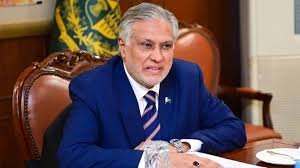
Federal Finance Minister Senator Muhammad Ishaq Dar has stressed that Pakistan’s long-term economic potential depends on the country’s ability to effectively address dual national challenges: rapid population growth and climate-related risks.
He made these remarks while speaking at the launch of the District Vulnerability Index of Pakistan, organized by the Population Council.
Minister Dar noted that while Pakistan continues on a path of overall economic stability and growth, the pressures arising from high population growth and escalating climate threats must be addressed for the country to reach its full potential. He highlighted that Pakistan’s population growth rate of approximately 2.5% is significantly high.
He also pointed out that rapid population growth has direct consequences for human development, contributing to persistent challenges such as stunted growth in children, educational deprivation, and a workforce ill-prepared for the future.
Meanwhile, climate change is exposing communities to extreme temperatures, floods, droughts, and environmental degradation, with the greatest impact on districts already facing poverty, weak infrastructure, and limited access to essential services.
Minister Dar assured that the Ministry of Finance is committed to integrating these priorities into budget planning and resource allocation, supporting national policy efforts on population and climate-related issues. He highlighted the growing role of finance ministries worldwide in mainstreaming environmental and population concerns and emphasized that Pakistan must adopt a similar approach to ensure long-term resilience and equitable development.
He praised the Population Council for developing a comprehensive, data-driven District Vulnerability Index based on three years of research. According to the minister, the index provides practical administrative insights across six sectors, highlights geographical disparities, and identifies the districts most at risk, particularly in Balochistan and Khyber Pakhtunkhwa.
The findings demonstrate how social vulnerabilities and climate risks reinforce each other, creating compounded threats for already marginalized populations. Minister Dar also drew attention to the rising trend of rural-to-urban migration and the expansion of informal settlements, where inadequate water, sanitation, and hygiene contribute to poor nutritional outcomes and sustained child malnutrition.
He encouraged further research on urban vulnerabilities to ensure national planning addresses the full scope of population and climate-related challenges. Minister Dar stressed the need to recognize the interdependence of population dynamics and environmental impacts and to incorporate vulnerability metrics into future resource allocation frameworks.
Integrating these insights into national planning, he said, is essential to promote equity, strengthen resilience, and support districts most in need. He concluded that the District Vulnerability Index will serve as a critical tool for guiding Pakistan’s future national strategies.