
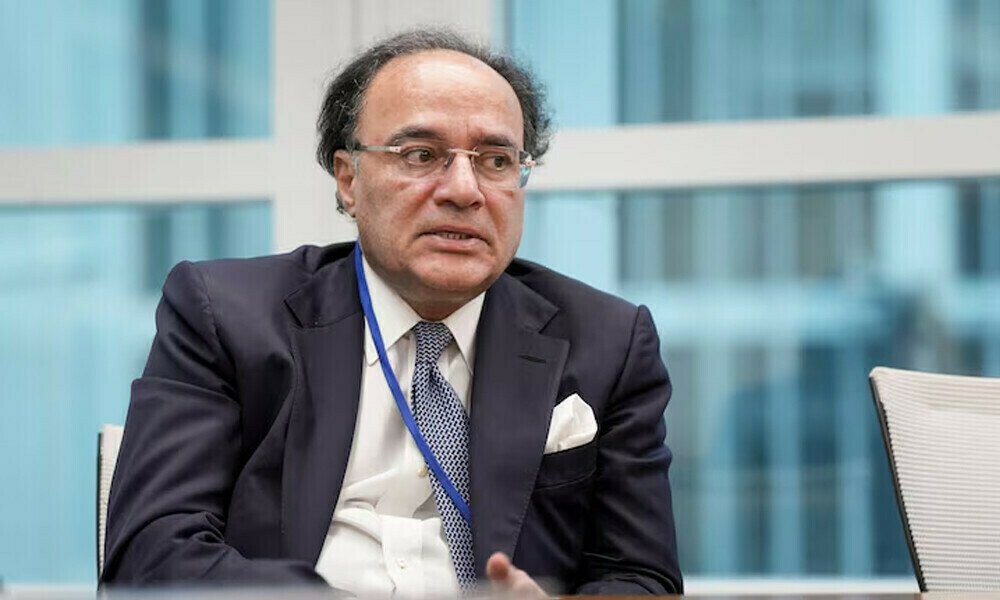
Finance Minister Muhammad Aurangzeb has expressed optimism about building consensus on the National Finance Commission (NFC) Award, saying he looks forward to highly constructive discussions this week with provincial chief ministers and finance ministers.
He added that “we will move forward, and I am confident that just as we signed the National Fiscal Pact last year through consultation with the federation and provinces, we will take this matter ahead with complete consensus as well.”
It is noteworthy that the 11th NFC was formally notified by the President on August 22, but its first meeting, scheduled for August 28, was postponed at the request of the Sindh government, which cited the emergency situation caused by recent devastating floods in the province. According to the Ministry of Finance, after receiving Sindh’s formal request, the NFC Secretariat postponed the meeting.
Muhammad Aurangzeb will chair this important meeting in Islamabad, where key provincial and federal stakeholders are expected to discuss the sensitive issue of the new NFC Award. The award is a crucial mechanism that determines the distribution of national financial resources and forms the foundation of Pakistan’s fiscal federalism.
In his remarks, the finance minister said Pakistan must address climate change and population growth challenges to reach its economic potential.
He reiterated that this year’s floods would reduce the GDP growth forecast by approximately 0.5%. He added that unchecked population growth would also slow down the pace of development.
Speaking about the new economy, the finance minister noted that since 64% of Pakistan’s population is under 30, the focus should not be on government jobs.
He added that many young people today are freelancers working in IT, digital services, and the digital economy. “We need to upskill and reskill them with AI, digital infrastructure, blockchain, Web 3.0, and other advanced technologies.”
Aurangzeb further stated that according to the latest analysis, Pakistan now ranks third globally in crypto participation, rising from its previous 10th position—highlighting the growing involvement of youth in the digital economy.