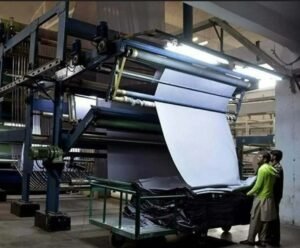
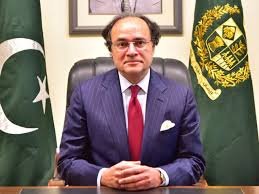
Federal Minister for Finance and Revenue, Muhammad Aurangzeb, announced that the decision to transition from the Final Tax Regime (FTR) to the Normal Tax Regime (NTR) will be comprehensively reviewed in the upcoming Federal Budget. This review aims to safeguard the interests of Pakistan’s export sector, particularly the textile industry, which he termed the “backbone of national exports.”
Speaking at the Karachi Chamber of Commerce and Industry (KCCI), the Finance Minister stated that the government is fully aware of the difficulties faced by export industries and will take necessary steps to enhance Pakistan’s competitiveness in the global market.
Major Tax Policy and Governance Reforms
He revealed a major structural reform: the Tax Policy Office has been separated from the Federal Board of Revenue (FBR) and placed under the Ministry of Finance, currently headed by Dr. Najeeb Ahmed Memon.
According to the Minister, the upcoming budget will be prepared by the Tax Policy Office, not the FBR, ensuring that budget formulation is based on economic value and growth rather than mere financial accounting. He noted that this arrangement, long demanded by the business community, will ensure consistency and coherence in policy. The Tax Policy team will remain available for continuous consultation with the business community, academia, and think tanks.
Focus on Exports, Diversification, and Cost Reduction
Minister Aurangzeb informed that the Prime Minister has formed eight working groups led by the private sector, with no ministers included. These groups will submit actionable economic recommendations by November 30. He announced the inclusion of KCCI in these consultative groups.
He stressed that every sector of the economy must contribute to exports to improve overall competitiveness. He pointed out that Pakistan’s auto industry has recently opened new export avenues in the GCC and African markets, signaling diversification. The government’s priority is to reduce the cost of production by lowering tariffs on industrial raw materials and reviving industrial activity.
Regarding FATA and PATA, he clarified that the tax exemption on income remains intact, though a 10% sales tax was imposed after detailed deliberation. He noted that IT exports reached $366 million in September 2025 and are expected to exceed $4 billion this fiscal year. The pharmaceutical sector is emerging as a growth area, while agricultural exports are projected to remain between $3 billion and $4 billion.
Concerning the Reko Diq project, the Minister said it is expected to reach financial closure by 2028, with projected exports of $2.8 billion in its first year of operation.
Business Community’s Concerns and Recommendations
Zubair Motiwala, Chairman of the Businessmen Group (BMG), criticized the government for always citing the IMF for every issue, while high energy prices have made production non-competitive. He stated that the cost of gas is PKR 1,868 per MMBTU but is being sold to consumers at PKR 3,500, which is illogical.
He proposed that the burden of circular debt should not be equally distributed across all sectors, but action should be taken only against the responsible entities. He suggested that adopting a gas cylinder model for domestic consumers could significantly reduce circular debt.
Mr. Motiwala urged Pakistan to negotiate with the IMF in a manner that allows for increasing foreign exchange earnings through exports. He claimed that if energy tariffs and duties on raw materials are brought down to the level of Bangladesh, Pakistan could achieve an additional $15 billion in exports within two years.
Rehan Hanif, President of KCCI, acknowledged that when Muhammad Aurangzeb took office, the economy was facing uncertainty, but in less than a year, stability has been restored, foreign exchange reserves have increased, the stock market reached record levels, and international agencies have improved Pakistan’s rating. He urged the government to align tax policies and the e-invoicing system to facilitate businesses.