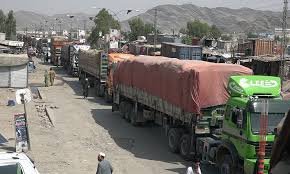
Repeated negotiations with the government have failed, and the ongoing strike by goods transporters has begun to bring the economy to a standstill. Billions of rupees in losses are being reported, while tax collection is expected to decline sharply. Prolonged protests against heavy fines and arrests in Punjab have raised fears of factory shutdowns. Space at ports is running out, and transport organizations have announced a nationwide wheel-jam strike on December 19.
According to a special report prepared by Tijarat News, the prolonged strike by goods transporters is severely disrupting the supply chain of raw materials for industries such as edible oil, steel, garments, and others from Karachi’s two ports. The risk of industrial shutdowns is increasing, while congestion at ports is creating serious capacity issues, potentially affecting maritime trade as well. In addition, the government is suffering daily losses of billions of rupees in tax revenues, making it even more difficult for the Federal Board of Revenue (FBR) to achieve its revenue targets.
It is noteworthy that goods transporters across the country are on strike against heavy fines, vehicle seizures, and the arrest of drivers by police in Punjab and Sindh. Despite several rounds of negotiations, the Punjab government has so far failed to end the strike. Reports indicate that the nine-day-long strike has put industrial and commercial activities in Karachi and across Sindh at serious risk. Business circles and trade organizations, in special conversations with Tijarat News, warned that if the strike is not resolved immediately, industrial production could come to a halt, import and export consignments could remain stuck at ports, and the supply chain could face complete disruption. In several cities, shortages of essential food items have already begun to emerge.
Due to the transporters’ strike, the movement of raw materials and finished goods has been severely affected, pushing many industrial units to the brink of closure. This protest began on December 8 following the enforcement of the Punjab Motor Vehicle Ordinance 2025, which introduced heavy fines, strict penalties, vehicle confiscation, and FIR clauses against drivers.
Industrialists and traders across Pakistan described the situation as extremely serious and devastating for the economy, stating that the prolonged strike over the past nine days has paralyzed industrial activity and is causing daily losses worth billions of rupees to the national economy. In industrial areas such as Korangi, Landhi, and Bin Qasim, the transportation of raw materials and finished goods has been badly affected, increasing fears that production processes in many factories may slow down or stop completely. They pointed out that delays in fulfilling export orders on time are also damaging Pakistan’s credibility in international markets.
Business leaders further said that delays in resolving issues between transporters and relevant authorities are becoming unbearable for the industrial sector. Industrialists and traders are already facing challenges such as high energy costs, elevated interest rates, and weak demand; in such circumstances, a complete paralysis of the transport system has created double pressure on the business community. They warned that if the government does not address the issue urgently, the economy could suffer irreparable damage.
Industrialists and traders urged the federal government and provincial administrations to intervene immediately and initiate an effective negotiation process between all parties to end the strike. They cautioned that if the situation does not normalize soon, unemployment could rise and long-term disruptions in the supply chain could occur. The business community emphasized that it wants to play its role in the country’s economic recovery, but this requires stability in key sectors such as logistics and transport. They expressed hope that the government would soon present a workable solution by addressing the concerns of transporters so that the wheels of the economy can keep turning.
On the other hand, transporters’ unions maintain that these laws were enforced without consultation with stakeholders and that, under the current conditions, routine transport operations have become economically unviable.
Meanwhile, Overseas Investors Chamber of Commerce and Industry (OICCI) Secretary General Abdul Aleem, in a letter to the Chief Minister of Sindh, described the situation as a serious challenge for industry and trade. He said the issue was also raised on December 12 before the Chief Secretaries of Punjab and Sindh. While partial relief has been provided in some areas of Punjab, conditions in Sindh remain unchanged. According to him, trucks coming from Punjab are not entering Karachi, and the movement of goods to and from ports—both domestic and international—remains disrupted.
According to OICCI, production activities have already stopped at least one member company, while other units may also face shutdowns in the coming days due to shortages of raw materials. The organization warned that if supply disruptions continue, industrial output, exports, and employment will be severely affected.
The Pakistan Vanaspati Manufacturers Association stated that the supply of edible oil, ghee, and other essential food items has been disrupted, while the transportation of industrial raw materials has almost come to a halt. The association warned that imported consignments stuck at ports are resulting in heavy losses in the form of demurrage and detention charges, which may ultimately be passed on to consumers.
According to Wajid Bukhari, Secretary General of the Pakistan Association of Large Steel Producers, the strike has delivered a severe blow to industrial production and the supply chain. He warned that prolonged disruption could lead to layoffs, wage cuts, and damage to the country’s reputation.
Meanwhile, the All Pakistan Transport Federation and other major transport organizations have announced a nationwide wheel-jam strike on December 19. Transporters have warned that if the controversial clauses of the Punjab Motor Vehicle Ordinance 2025 are not reviewed, all forms of transportation—including essential goods and passenger transport—will remain suspended. Business circles have demanded immediate negotiations and practical measures from the government to prevent major economic losses.