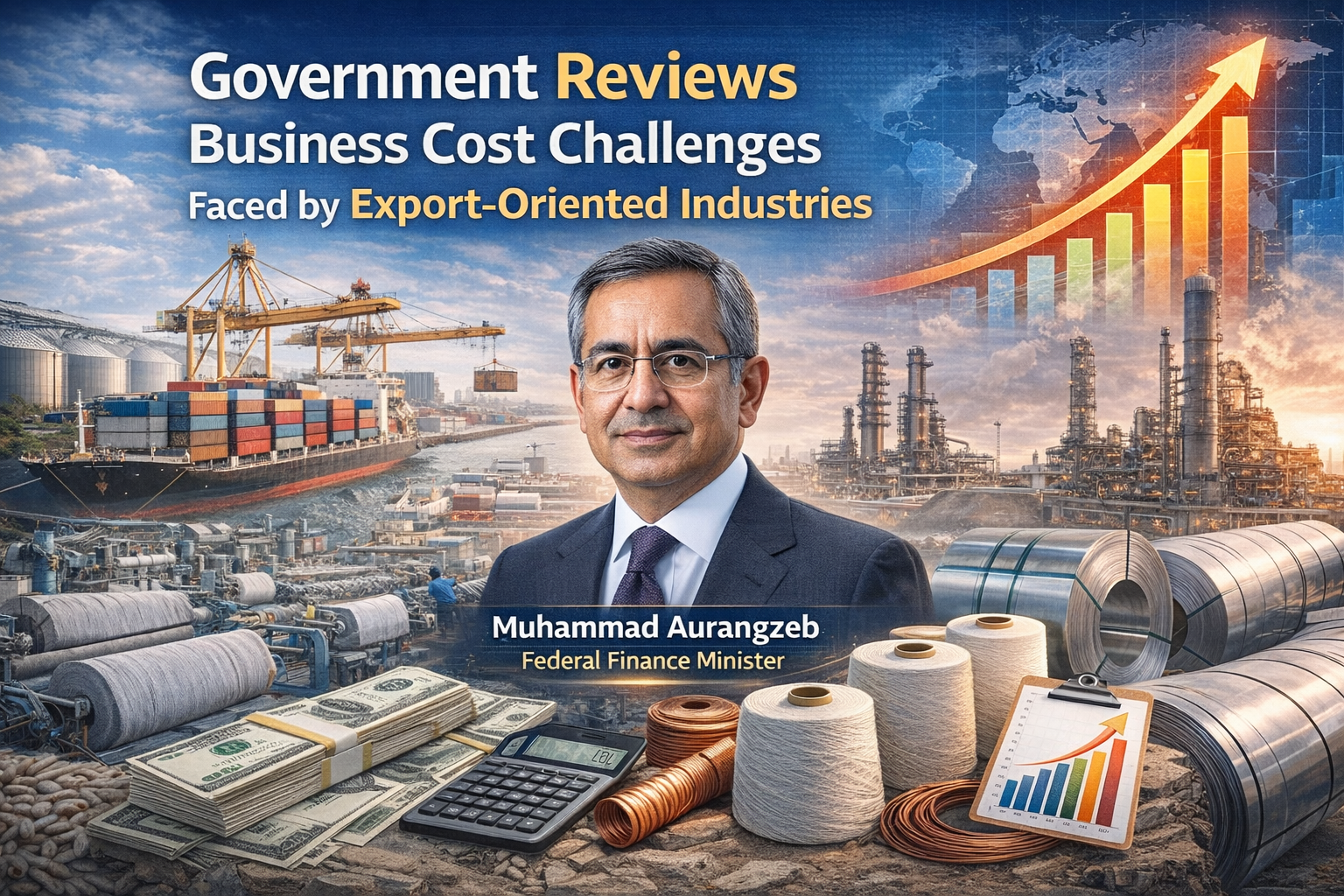
The government is reviewing business cost challenges faced by export-oriented industries, Federal Finance Minister Muhammad Aurangzeb has said.
According to sources, Muhammad Aurangzeb stated that the government is actively reviewing various issues that affect business costs for export-based industries. He made these remarks during a meeting with a delegation of the All Pakistan Textile Mills Association (APTMA) held the previous day. Federal Minister for Petroleum Ali Pervaiz Malik was also present at the meeting.
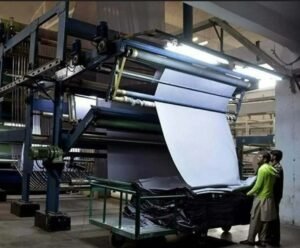
During the discussion, the ministers stressed that the textile industry is a pillar of Pakistan’s economy due to its significant contribution to exports, employment, and industrial activity. They emphasized that the government remains committed to maintaining a fair and predictable policy environment for businesses, while highlighting the importance of justice, transparency, and broad-based participation in the economy.
The statement said the government is engaged in addressing genuine issues faced by legitimate sectors, while structural reforms are also being advanced through consultation and institutional processes. The finance minister said that ensuring the availability of affordable energy is a key priority, and various options are being considered in consultation with relevant ministries and stakeholders to improve efficiency and competitiveness, while also ensuring fiscal responsibility and system sustainability.
According to sources, Senator Muhammad Aurangzeb added that reforms in the energy sector are being carried out in a balanced manner to support industrial production and safeguard the long-term interests of the national economy. He said that issues requiring immediate attention are being addressed on a priority basis, while broader policy matters will be taken forward through established budgetary and reform mechanisms.
Sources further said that practical constraints and supply-related challenges faced by certain industrial sectors were also discussed, and the ministers assured the delegation of continued coordination with relevant authorities to ensure smooth industrial operations. The importance of maintaining constructive engagement between the government and industry, particularly in the context of current domestic and international economic conditions, was also emphasized.
Earlier, the APTMA delegation briefed the ministers on the current situation of the textile sector and highlighted the pressure faced by exporters due to rising global competition. The delegation noted that changing dynamics in international markets and increasing raw material costs have created challenges for the sector, and stressed the need for a supportive and stable operating framework to boost exports and sustain employment.
The delegation also drew attention to energy prices, regulatory compliance, and tax-related issues, stating that rising overall costs are affecting competitiveness in export markets.