The International Monetary Fund (IMF) said on Tuesday that economic activity in the Middle East, North Africa (MENA) region, and Pakistan has been stronger than expected this year.
In its latest Regional Economic Outlook, the IMF projected that MENA’s growth will reach 3.2% in 2025 and rise further to 3.7% in 2026 — 0.7 and 0.3 percentage points higher, respectively, than its previous forecasts made in May.
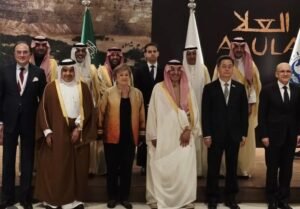
Jihad Azour, Director of the IMF’s Middle East and Central Asia Department, said that economic momentum in both the MENA region and Pakistan has exceeded expectations. He noted that Pakistan’s economy grew by 3.2% in 2025, compared to 2.1% in 2024, outperforming the IMF’s April projection.
According to Azour, oil-exporting countries are benefiting from increased OPEC+ production, while oil-importing economies, including Pakistan, are seeing gains from lower energy prices, stronger remittances, and a robust tourism sector, all contributing to higher domestic demand.
He added that growth could reach 3.7% in 2026, with inflation expected to remain moderate, supported by lower food and energy prices and tight monetary policies.
However, the IMF cautioned that inflation trends remain uneven across the region — relatively low in most MENA economies and Pakistan, but elevated in some Central Asian countries due to strong demand and persistent price pressures.
The report projected that Pakistan’s growth will increase to 3.6% in 2026, driven by ongoing reforms, improved financial conditions, and rising public confidence.
The IMF also noted that inflation in Pakistan has eased this year, mainly due to lower energy and food prices. However, it warned that inflation could pick up again in 2026 as prices normalize and temporary electricity subsidies are withdrawn.
The report further highlighted that severe floods expected in Q3 2025 could have more negative impacts on Pakistan’s growth, inflation, and current account than anticipated, although significant uncertainty still surrounds these potential effects.