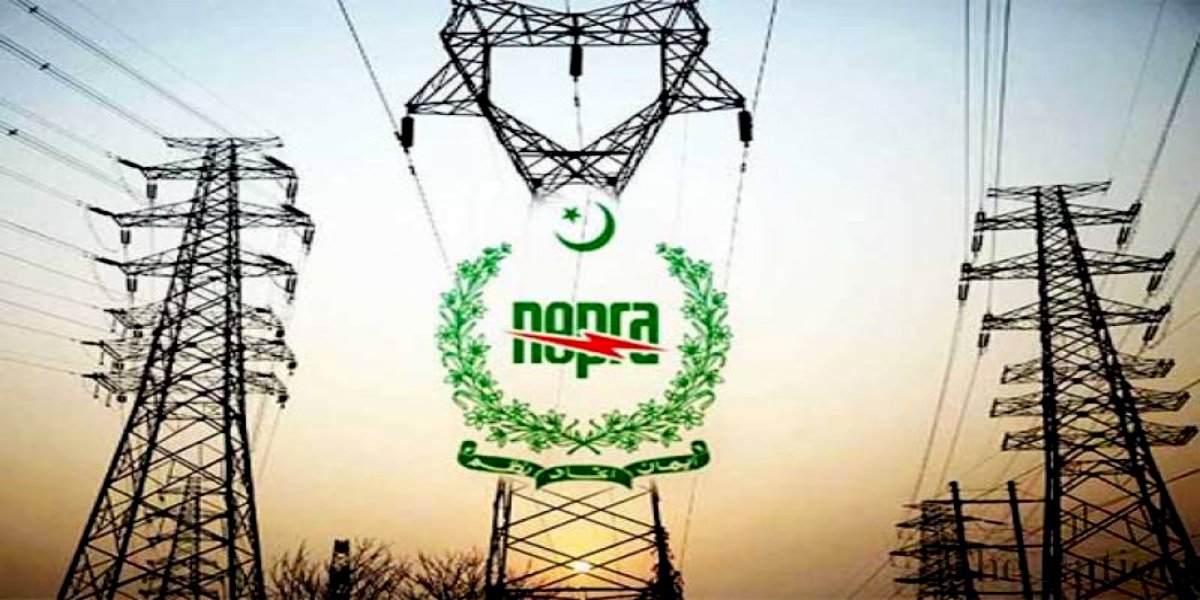
The National Electric Power Regulatory Authority (NEPRA) has approved the government’s three-year incentive-based incremental tariff package, disregarding proposals submitted by the industrial sector. Under the package, the tariff for industrial and private agricultural consumers has been set at Rs 22.98 per unit.
According to sources, the reference period for calculating incremental consumption has been fixed from December 2023 to November 2024. The package will apply only to industrial and private agricultural consumers, as stated in the notified schedule.
It is noteworthy that on November 11, 2025, NEPRA held a public hearing on this incentive tariff package with representatives from the public and private sectors.
According to NEPRA, if a consumer’s consumption record is unavailable or their reference consumption is zero, then the benchmark rules for new consumers will apply. Consumers who change their tariff category after the reference month or move from non–time-of-use to time-of-use will also be treated as new consumers. However, consumers who remain within the same category—such as moving from B2 to B3—will not be treated as new consumers, and the existing benchmark formulas will apply for increased load.
Consumers who change their category, such as shifting from commercial to industrial, will also be treated as new consumers for eligibility under the package. If a consumer remained disconnected during the reference period or had a faulty meter, the new consumer benchmark rules will be applied.
In any month where the consumer’s meter is faulty or locked, they will not receive the concession for that month. Detection units will neither be included in the benchmark calculation nor counted as incremental consumption. Dial adjustments (other than detection) will be included in the benchmark calculation.
All captive power plants (CPPs) will be treated as new consumers. If a consumer’s meter cannot record MDI, only the sanctioned load will be used for benchmark purposes. Duties and taxes will apply to the payable amount.
Net metering consumers will be eligible only if the relevant month shows net electricity import. The benchmark will be based solely on imported units, and the incremental units limit will be set according to net import (import minus export). Incremental units will be proportionately divided between peak and off-peak hours. Tariff differential subsidy will not be applied to these units.
Wheeling consumers will also be eligible under the package and will be treated as new consumers. NEPRA confirmed that K-Electric’s interpretation regarding net metering—where only the current month’s imports are counted—is correct.
Meanwhile, business circles criticized NEPRA, alleging that the regulator approved the Power Division’s proposals without proper consideration. They further said NEPRA has now become a rubber stamp, and public hearings have become mere formalities. They argued that the package is discriminatory, will shut down certain industries, and unnecessarily benefit others. Most textile mills, they said, will be excluded due to the 60% load factor requirement.
Responding to the criticism, the Power Division stated that industrial tariffs have already fallen from Rs 62.99 per unit in March 2024 to Rs 44.70 per unit in October 2025. The division defended the use of a one-year benchmark period, stating that industrial consumption during this period was at its lowest, thus providing a more favorable benchmark for consumers. It added that industry had already consumed 34 billion units in 2022—20% higher than the benchmark period—therefore, the package can be utilized without additional investment. The division also dismissed claims of IMF opposition, stating that the IMF has never objected to subsidy-neutral schemes that increase grid consumption.
Sources say that NEPRA acknowledged that stakeholders strongly objected to the excessively high load factors proposed by the Power Division. NEPRA noted that actual industrial load factors are much lower. It said that although using the actual load factors would have been more appropriate, the Power Division’s load factors were approved to avoid placing an additional burden on other consumers through quarterly adjustments. NEPRA amended the formula for new consumers, adopting the principle of using the MDI value that enhances a consumer’s eligibility for the relevant month. NEPRA maintained the inclusion of wheeling consumers, stating that excluding them would violate Section 7(6) of the NEPRA Act and undermine the goal of increasing industrial consumption.