The National Electric Power Regulatory Authority (NEPRA) has approved a uniform average national tariff for the year 2026 for distribution companies (DISCOs) and K-Electric, despite strong objections raised by the industrial and export sectors.
According to sources, these concerns were voiced during a public hearing held on the federal government’s request for the determination of a uniform electricity tariff. Earlier, NEPRA had proposed a reduction of 61 paisas per unit for the year 2026. Under the tariff finalized on January 7, the average tariff for DISCOs was reduced from Rs. 34 to Rs. 33.38 per unit, which the government forwarded to NEPRA for the implementation of a uniform tariff.
Sources said the hearing was chaired by NEPRA Chairman Waseem Mukhtar, with members Maqsood Anwar Khan and Amina Ahmed also in attendance. A delegation from the Power Division briefed the forum on the sector’s financial challenges, electricity demand and supply, future generation plans, and the impact of net metering and off-grid solar.
Industrial representatives stated that DISCO tariffs include approximately Rs. 131 billion in cross-subsidies, while the figure for K-Electric’s network has reached nearly Rs. 160 billion. This means industrial consumers are paying about Rs. 7 extra per unit. They argued that if industry were relieved of this burden, tariffs could fall to around nine cents per unit, helping restore export competitiveness.
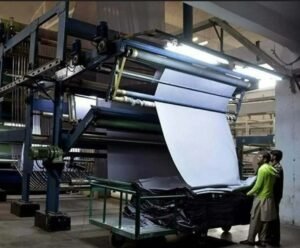
Textile sector representatives said that the number of spindles in Pakistan has declined from 10.5 million to nearly half, whereas in China’s poorest province, Xinjiang, the government has provided electricity at five cents per unit, enabling the installation of over three million spindles, with an additional 1.5 million planned. In comparison, Pakistan’s industrial tariff stands at approximately 12.9 cents per unit, which has strengthened imported fabrics in the local market at the expense of domestic products.
Participants noted that despite better bill recovery and lower losses, industrial consumers are paying up to Rs. 35 per unit, including the debt servicing surcharge, while the actual cost is around Rs. 29 per unit. The All Pakistan Textile Mills Association (APTMA) proposed eliminating cross-subsidies from B-category consumers and aligning large industrial tariffs with regional rates, which would boost investment, employment, and exports.
The Power Division stated that efforts to reduce industrial tariffs are ongoing and that industrial rates have been reduced by up to 26 percent over the past 18 months. Officials also informed the forum that Pakistan’s installed power generation capacity stands at 58,000 megawatts, with the share of renewable energy rising rapidly. NEPRA was told that by 2035, total installed capacity is expected to reach 87,000 megawatts, while the burden of imported fuel is projected to decline to $300 million.
It was further stated that large-scale solarization has reduced electricity consumption, with the resulting financial burden being borne by existing consumers. According to the Power Division, the circular debt is expected to remain at around Rs. 1.6 trillion by June 2025.