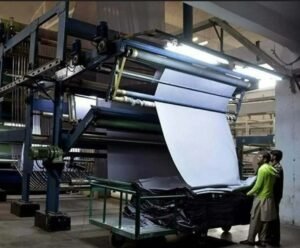
Nestlé Pakistan, a subsidiary of Swiss company Nestlé S.A., has upgraded its manufacturing operations in Sheikhupura and Khanewal to global standards, making both factories fully automated and integrated with Nestlé’s worldwide system.
During a meeting with Finance Minister Muhammad Aurangzeb on Monday, the Nestlé Pakistan delegation stated that this modernization brings their operations in Pakistan on par with the company’s top global plants.
The delegation—led by Chief Executive Officer Jason Avencina, accompanied by Chief Financial Officer Maqsood Ahmed Anjum and Head of Corporate Affairs & Sustainability Sheikh Waqar Ahmed—briefed the finance minister on the company’s long-term commitment to Pakistan and its future expansion plans.
The CEO highlighted significant progress in Nestlé Pakistan’s technology-driven manufacturing processes.
Avencina also elaborated on ongoing and upcoming investments in sustainability, agricultural transformation, increasing manufacturing capacity, and the implementation of advanced technologies across the value chain. He explained that Nestlé is adopting solar and biomass energy systems, digital dashboards, environmentally improved packaging, and supply-chain automation—helping reduce operational costs and greenhouse gas emissions while boosting long-term competitiveness.
During the meeting, Finance Minister Aurangzeb reaffirmed the government’s commitment to strengthening Pakistan’s formal economy and encouraging responsible, long-term investment. He emphasized strict oversight of the informal sector, noting that improved compliance, transparency, and a stronger tax ecosystem are vital for economic recovery.
He highlighted the establishment of a Tax Policy Office within the Finance Division as a major structural reform, enabling continuous engagement with the private sector throughout the year for better policy design and effective implementation ahead of future budget cycles.
The minister noted that Nestlé Pakistan has halved its imports over the past three years—from around $150 million to $76–80 million—reducing pressure on foreign exchange reserves and deepening integration with Pakistan’s agricultural and manufacturing base.
He appreciated the company’s localization efforts and stressed the government’s resolve to enhance formalization and tax equity in the food and beverage sector. He added that the success achieved in the tobacco sector—where formal sector volumes increased due to stricter enforcement—can be replicated in other industries such as packaged juices, where informal players are rapidly gaining market share by operating outside the tax net.
The finance minister welcomed Nestlé Pakistan’s willingness to collaborate with the Tax Policy Office on potential reforms to improve tax collection, address sectoral anomalies, support domestic manufacturing, and safeguard public welfare objectives.
The delegation also discussed export performance, noting the company’s presence in markets including the United States, Canada, the Gulf region, and the United Kingdom.
The finance minister instructed officials to explore logistics partnerships aimed at increasing access to Central Asian markets, reiterating the government’s commitment to promoting export-oriented industrial growth.
Referring to Nestlé’s significant investments planned over the coming years—in sustainability, agricultural transformation, automation, and enhanced production capacity in child and dairy nutrition—the delegation expressed the company’s intention to announce these initiatives globally.
They also noted that Nestlé’s global leadership, including Rémy Ejel, Executive Vice President for Zone Asia, Oceania, and Africa, plans to attend the upcoming World Economic Forum Annual Meeting in Davos and looks forward to meeting Prime Minister Shehbaz Sharif.