Overseas Pakistanis Are the Backbone of the National Economy: Chaudhry Salik Hussain
Industrialists Will No Longer Face Physical Notices or Harassment: Federal Minister for Overseas Pakistanis & Human Resource Development
Federal Minister for Overseas Pakistanis and Human Resource Development, Chaudhry Salik Hussain, stated that overseas Pakistanis are currently the backbone of the national economy, and the government is working on comprehensive reforms to resolve their issues, promote skills development, and provide better employment opportunities. He said that key institutions, including EOBI, are being digitized so that instead of harassment, facilitation is provided to industrialists, creating a business-friendly environment for taxpayers.
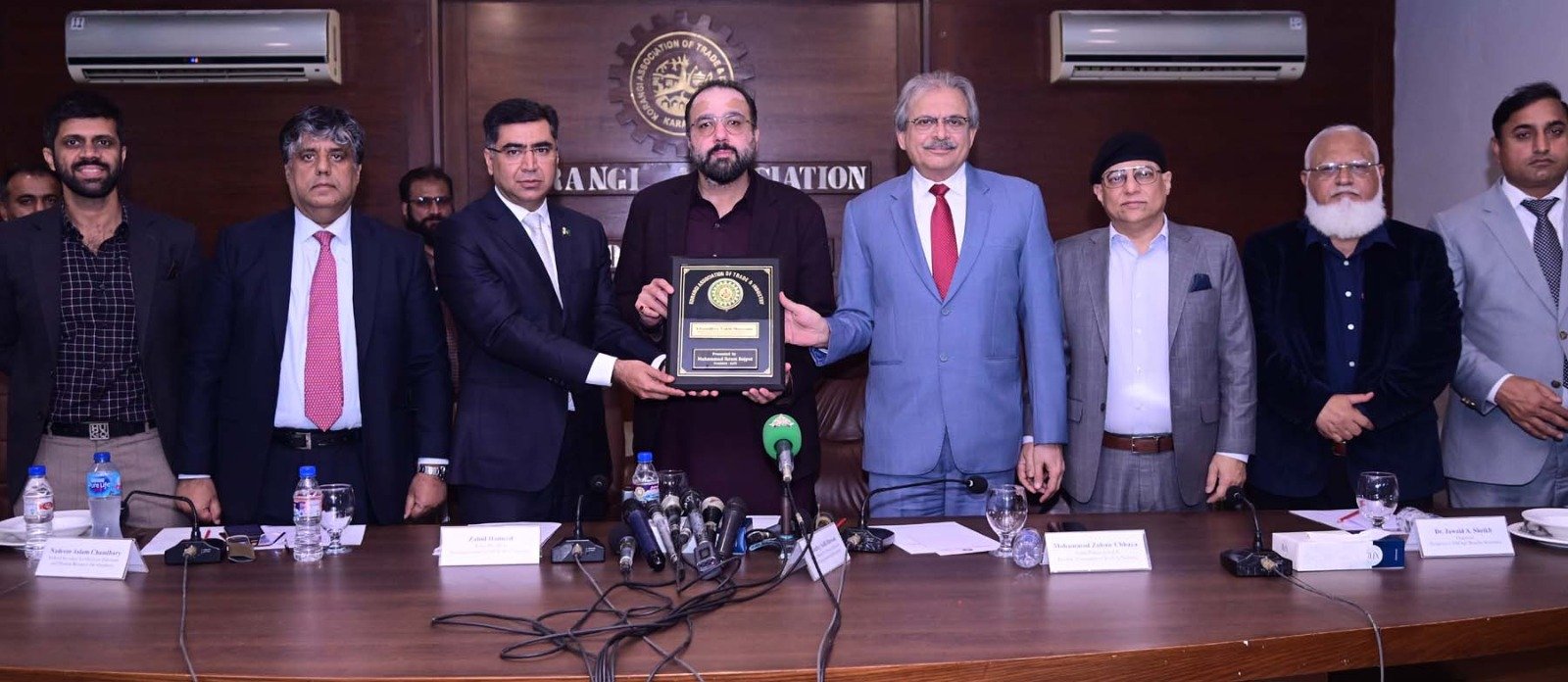
He expressed these views while addressing a ceremony held during his visit to the Korangi Association of Trade and Industry (KATI). On the occasion, Federal Secretary for Overseas Pakistanis and Human Resource Development Nadeem Aslam Chaudhry, Acting President KATI Zahid Hameed, Acting Patron-in-Chief Zubair Chhaya, Former President Masood Naqi, Chairman EOBI Javed A. Sheikh, Vice President Talha Ali, Razzak Hashim Pracha, Ihteshamuddin, and others were also present.
The Federal Minister said that initial briefings regarding EOBI made it clear that the institution can become self-sufficient due to the availability of large funds. He assured that in the future, industrialists will not face physical notices or harassment, as the system will be fully digitized. He added that FBR must work not merely as a revenue-collection body but as a facilitation and marketing institution to expand the tax net.
Chaudhry Salik Hussain further said that the government aims to provide overseas employment opportunities to 800,000 people this year, and demand for Pakistani labor has significantly increased in GCC countries and other regions. He noted that soft skills training programs are being introduced in collaboration with Korea and Japan. Previously, women were legally allowed to seek overseas employment only after the age of 35; this limit has now been reduced to 25 years so women can remain employed for a longer period and contribute through remittances. He also stated that a Pakistani worker in Korea sends an average of USD 1,800 per month in remittances to Pakistan.
Earlier, Acting President KATI Zahid Hameed said that over 9 million Pakistanis are currently residing abroad and send approximately USD 38 billion in remittances annually. These remittances serve as the backbone of Pakistan’s foreign exchange reserves, current account, and overall economic stability. He emphasized that overseas Pakistanis are the country’s true ambassadors. If the government promotes certification and skill development, Pakistan can earn billions of dollars in foreign exchange.
He further stated that overseas Pakistanis are mostly confined to low-level jobs, making it essential to enhance skills and capabilities through public-private partnerships to ensure better employment and higher incomes.
Acting Patron-in-Chief Zubair Chhaya said that KATI plays a significant role in national development, with exports worth USD 3 billion originating from the Korangi industrial area alone. He said that after the Maarka-e-Haq, new opportunities have emerged for Pakistan, and the world is now looking toward the country.
Highlighting the challenges faced by industrialists, he said repeated audit notices and the strict attitude of FBR have discouraged business owners. It is essential to facilitate industrialists who play a major role in national development. He added that compared to regional countries, Pakistan has higher energy and tax costs, which discourages new industrial investment. He stressed the need for proper pre-departure training programs and resolution of issues such as mobile SIMs for overseas workers.
Zubair Chhaya further said that public-private partnerships can not only resolve workforce issues but also accelerate industrial growth. He expressed KATI’s readiness to fully cooperate with the Ministry of Overseas Pakistanis in training programs and policy recommendations.
Former KATI President Masood Naqi, while speaking on revenue and employment, said that no industrial area in Pakistan matches Korangi. He urged the Federal Minister to visit Korangi with his team to observe how industrialists provide international-standard training to their workers. He called for the establishment of an effective mechanism to reduce challenges faced by industrialists, stating that existing trainers and teams can deliver long-term positive results.
He termed EOBI a loss-making institution and demanded a review of its policies and board structure. He also expressed concern over a large number of pending court cases related to EOBI and stressed that these longstanding cases should be resolved through consultation.
In conclusion, Federal Minister Chaudhry Salik Hussain invited industrialists to Islamabad and reaffirmed that the government believes in mutual consultation and practical steps to resolve all issues related to industry and workforce development.