
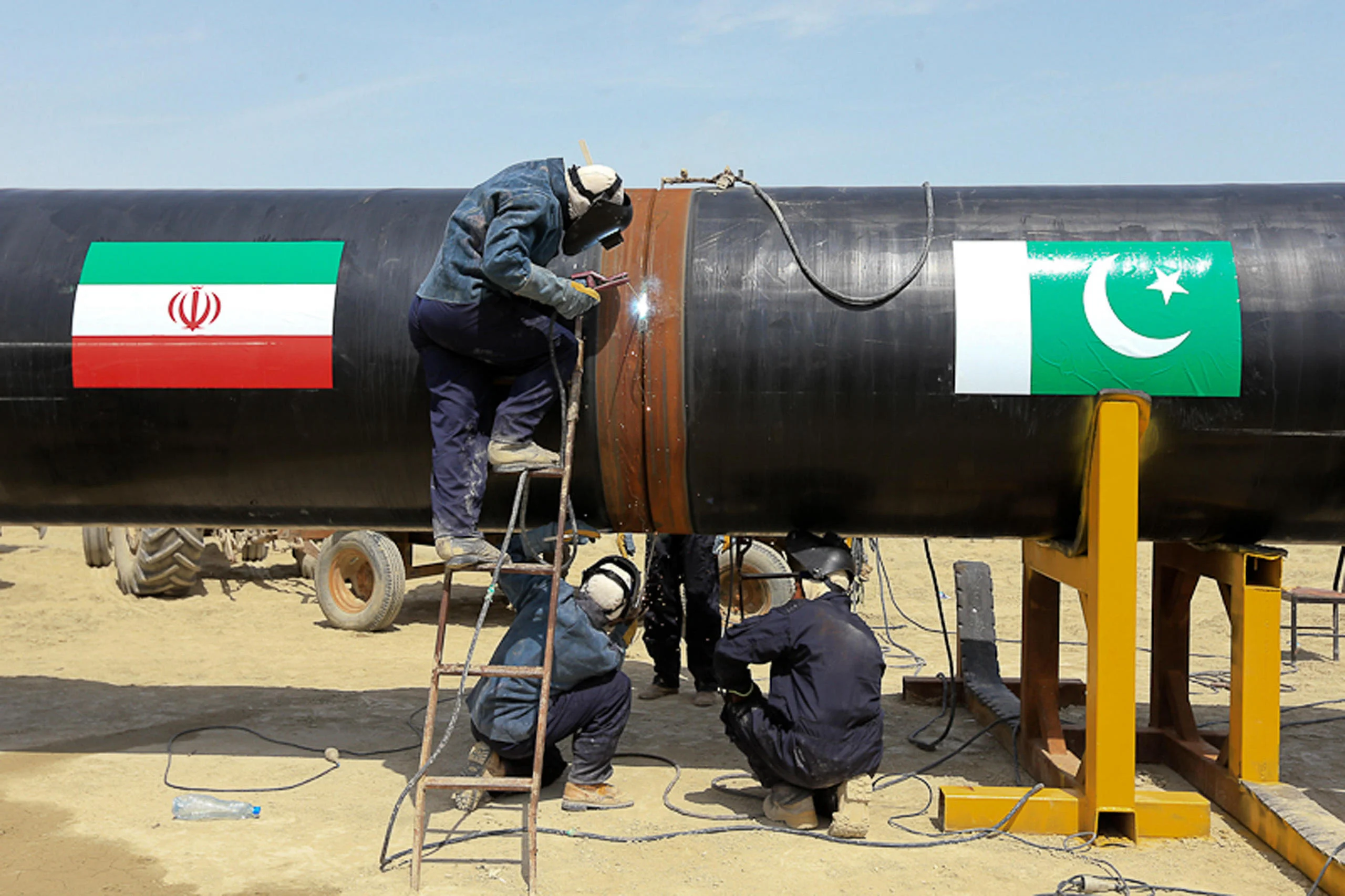
Pakistan has asked Iran to terminate the Pakistan–Iran gas pipeline project through an out-of-court settlement, while Iran has agreed to extend the agreement by ten years instead of terminating it.
According to sources, work on the Pakistan–Iran gas pipeline has remained suspended since 2014 due to US sanctions. Iran has already extended the agreement by ten years and is prepared to grant another ten-year extension, but Pakistan wants to terminate the contract due to low domestic gas demand and US sanctions.
Sources said Pakistan is willing to consider an extension only if the United States grants a sanctions waiver and Iran reduces both the price and volume of gas. According to sources, since Iran initiated legal action over Pakistan’s failure to implement the pipeline agreement, both countries have remained engaged in back-channel diplomatic contacts. The issue has also been raised with senior Iranian officials during their visits to Pakistan.
Officials stated that Pakistan had asked Iran to terminate the agreement long ago due to US sanctions. Moreover, gas supplies in the country are already in surplus because of low demand. As a result, LNG contracts with Qatar for 2026 were terminated, as Iranian gas is even more expensive than LNG.
Sources said Pakistan had previously sought a US waiver to implement the agreement, but the request was denied. Iran claims it has completed its part of the project, while Pakistan has yet to begin construction.
US State Department spokesperson Matthew Miller has previously warned countries to consider the implications of entering into commercial agreements with Iran. Pakistan had earlier attempted to explore alternative ways to implement the Pakistan–Iran gas pipeline project.
According to sources, under an alternative plan, Pakistan intended to lay an LNG pipeline up to Gwadar and extend it to the Iranian border, but the plan was abandoned due to pressure from US sanctions. LNG imported from Qatar for the power sector was not fully utilized, resulting in surplus gas supplies.
To increase LNG usage in the power sector, the government has announced the provision of cheaper electricity to the agricultural and industrial sectors and lifted a ten-year ban on issuing new gas connections to domestic and commercial consumers. Officials said the aim is to boost consumption and resolve the issue of excess LNG stocks; however, new connection holders will receive gas at LNG-based prices.