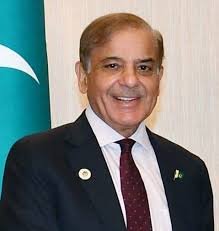
Prime Minister Shehbaz Sharif has said that Pakistan considers the peaceful resolution of conflicts a fundamental pillar of its foreign policy, and it was with this spirit that Pakistan supported the Gaza peace plan, which was later approved by the UN Security Council.
He was addressing an international forum held to mark the International Year of Peace and Trust 2025, the International Day of Neutrality, and the anniversary of Turkmenistan’s permanent neutrality. The Prime Minister stated that Pakistan began the year as a non-permanent member of the UN Security Council, where it is playing an active role in the promotion of global peace and security.
He warned that terrorism is once again on the rise, and unfortunately, its center this time appears to be Afghan soil. He urged the international community to put pressure on the Afghan Taliban so they fulfill their international obligations and prevent terrorist elements operating from their territory.
The Prime Minister expressed special gratitude to Qatar, Türkiye, Saudi Arabia, the United Arab Emirates, and Iran for their efforts toward a permanent ceasefire in Gaza. He said the Security Council’s unanimous resolution reaffirms Pakistan’s principled stance that conflicts should be resolved through dialogue and peace. He expressed hope that ongoing efforts, with the cooperation of Arab and Islamic countries, will not only save innocent Palestinian lives but also pave the way for a lasting ceasefire, the delivery of humanitarian aid, and the reconstruction of Gaza.
Prime Minister Shehbaz Sharif reiterated Pakistan’s support for the right to self-determination of Palestinians and Kashmiris. He said that the path to lasting peace is linked to sustainable development, and the 2030 Agenda provides a global framework for that purpose.
He highlighted Pakistan’s progress in areas such as financial inclusion, bringing women and marginalized groups into the economic mainstream, and environmental restoration. However, he noted that Pakistan and other developing countries face challenges like climate disasters, economic inequality, and unequal access to technology—issues that cannot be resolved without a collective global strategy.
The Prime Minister called on world leaders to adopt a new approach based on global partnership and cooperation.