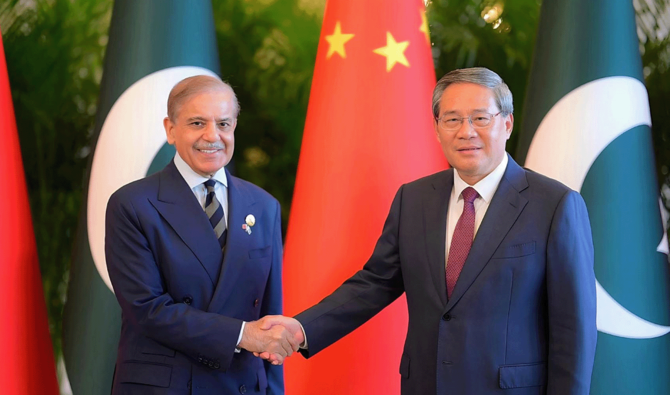
Pakistan has formally sought China’s support to obtain membership in the New Development Bank (NDB) — formerly known as the BRICS Development Bank. The move is part of Islamabad’s efforts to enhance access to multilateral financing sources and strengthen economic cooperation between the two countries.
The development took place during a meeting between Finance Minister Muhammad Aurangzeb and China’s Vice Finance Minister Liao Min in Washington, D.C.
According to a statement issued by Pakistan’s Ministry of Finance, Aurangzeb requested China’s support for Pakistan’s NDB membership and welcomed increased Chinese investment in key sectors such as information and communications technology, agriculture, industry, and minerals.
The New Development Bank is a multilateral development institution established by the BRICS nations to finance infrastructure and sustainable development projects in developing countries. Initially limited to the five founding BRICS members, the NDB has since expanded its membership to include several other countries.
During the meeting, Aurangzeb also briefed Liao Min on the recent staff-level agreement with the International Monetary Fund (IMF), describing it as international validation of the government’s ongoing economic reform agenda. He also shared updates on Pakistan’s plans to issue Panda Bonds in the Chinese market.
The finance minister expressed gratitude to the IMF Executive Director’s office for its strong support of Pakistan during recent board meetings and extended an invitation to Liao Min to visit Pakistan at a mutually convenient time.
Later, Aurangzeb participated in the World Economic Forum’s “Future of Growth Initiative Dialogue”, where he stressed the need to advance technology through an inclusive and resilient strategy.
He highlighted the role of AI-based monitoring in boosting efficiency and productivity, citing satellite imagery applications as an example. Such technologies, he said, have played a significant role in raising farmers’ incomes and improving service delivery in developing countries.