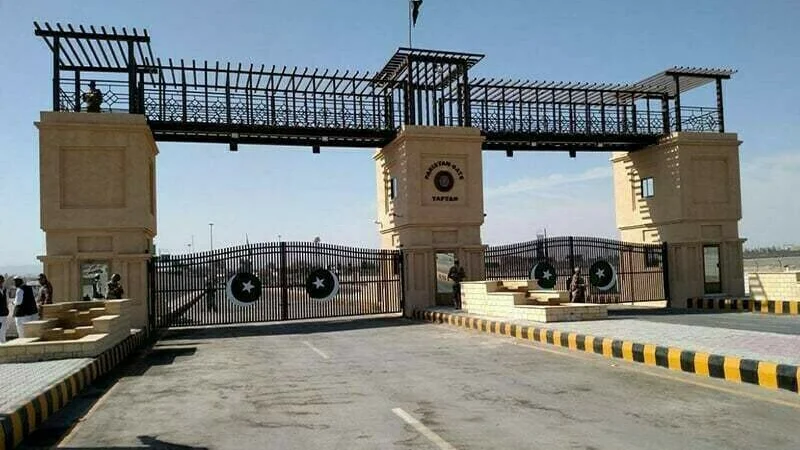
ISLAMABAD: Pakistan has stopped trade with Iran through two official border crossings, Gabd-Rimdan and Taftan. The Ministry of Commerce announced the decision in a notice on Friday, canceling an earlier order right away.
Shahid Rind, an adviser to the Balochistan chief minister, said the border is closed temporarily to improve security, stop smuggling and make the border system work better. In a post on X, he said rumors on social media about the closure are not true and urged people not to trust unverified information.
Rind said the move is needed to improve security and administration on both sides of the border. He said officials from both countries are working to fix administrative problems and that the border will likely reopen soon. He added that a new coordinated system is being set up to improve border management and stop smuggling.
Iran’s foreign ministry spokesperson, Esmail Baqaei, also said the closure is temporary, Iran’s state-run IRNA news agency reported. He said the closure was due to technical issues and that the two countries are talking to fix the problem and get back to normal.
The Quetta Chamber of Commerce and Industry told its members and businesses trading with Iran to stop placing new import and export orders until further notice. Sources said Pakistani and Iranian officials have made initial contact since the closure.
Hundreds of trucks carrying liquefied petroleum gas (LPG), rice, fresh fruit and other important goods are reportedly stuck on both sides of the border.
Iran-based Wana news agency said passengers can still cross at Rimdan-Gabd. It quoted Syed Hossein Hosseini, director general of the Iranian Transit Office, as saying business operations at the crossing have stopped.
The Gabd-Rimdan crossing had become a key route for Pakistan’s energy needs, with more than 4,000 tonnes of LPG reportedly imported every day. Exports of Pakistani goods, especially rice, had also grown in recent months, earning millions of dollars.
Trade and energy sources warned the closure could make LPG shortages worse in Karachi and other parts of the country. The Taftan route was already facing problems because of unrest in Balochistan. Stopping supplies through Gabd-Rimdan could raise LPG prices in the open market.
Local traders and the chamber warned the disruption could cause big losses to the national treasury, hurt many people’s livelihoods and lead to an energy crisis.
Since March, Pakistan and Iran have taken several steps to make border trade easier, including simpler customs procedures, making Taftan an official customs station and announcing new transit routes. This comes as the ongoing U.S.-Iran war has put pressure on economies in the region and beyond.
In early August, an Iranian delegation led by Trade and Industry Minister Mohammad Atabak visited Islamabad for the 10th meeting of the Pakistan-Iran Joint Trade Committee. The delegation also met with Prime Minister Shehbaz Sharif. Both sides agreed to expand trade by keeping border crossings open 24 hours a day, improving logistics and making customs procedures consistent.
The visit came a couple of months after reports that trade between Pakistan and Iran through the Gabd-Rimdan crossing had stopped completely.
According to Jiand Hoot, president of the Gwadar Chamber of Commerce and Industry, trade through the Panjgur and Mand-Radig border crossings was almost nonexistent because of poor roads and repeated incidents of arson and vehicles being burned.