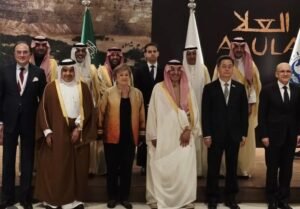
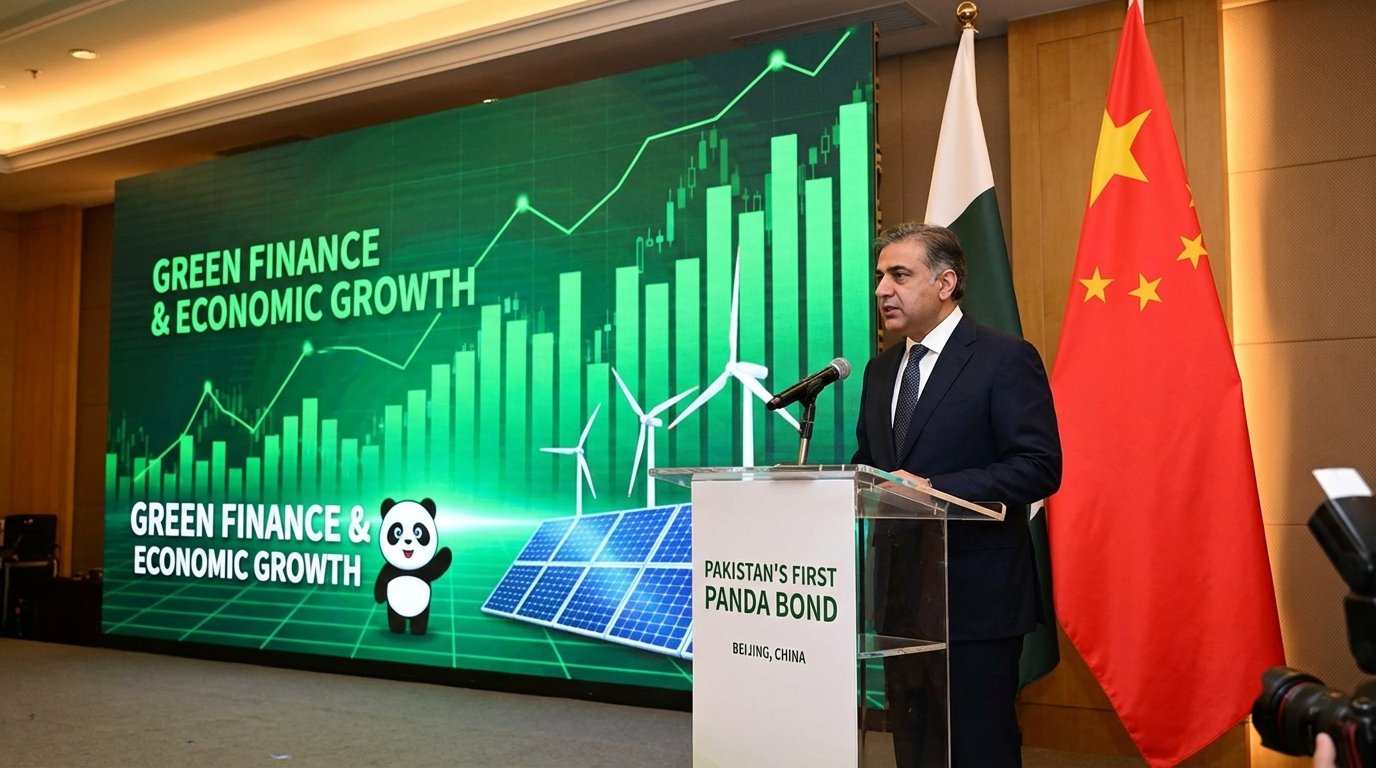
Federal Finance Minister Muhammad Aurangzeb said at the World Economic Forum in Davos that Pakistan will, for the first time, issue a Panda Bond in the Chinese capital market by the end of this month. The bond will be structured as a Green Bond, reflecting the country’s sustainable and environmentally strong financial strategy.
According to sources, he stated that this will be the inaugural issuance of a Panda Bond, entirely within the framework of sustainable finance. Pakistan is among the countries most affected by environmental financial risks.
A Panda Bond is issued in China’s domestic market in Renminbi (RMB) by non-Chinese entities, such as governments or companies. It provides access to Chinese investors and helps increase the global acceptance of the Renminbi.
The Finance Minister emphasized the importance of financial discipline, effective use of debt, and export-led growth as key to unlocking new sources of economic growth. He stated that debt is not inherently bad if it is used for productive investment. For countries like Pakistan, debt must be invested in projects that increase exports rather than just domestic consumption, ensuring sustainable repayments and long-term development.
He noted that emerging economies lack reserve currencies, making it essential to ensure market performance, cautious borrowing, and management of foreign exchange risks.
Sources reported that Muhammad Aurangzeb highlighted Pakistan’s recent achievements: reducing the debt-to-GDP ratio from 75% to 70%, achieving a primary surplus, and restoring financial stability through responsible economic management. Inflation has fallen from 38% to single digits, and the policy rate has been reduced from 22% to 10.5%.
The Finance Minister also addressed climate change risks, noting that Pakistan responded to recent floods using local resources rather than external aid, demonstrating the importance of financial resilience. He emphasized the role of public-private partnerships and capital markets, citing the successful $3.6 billion syndicated financing of Pakistan’s large copper mining project, which is expected to generate about $2.8 billion in annual exports by 2028.
Muhammad Aurangzeb also highlighted Pakistan’s strong capabilities in technology and digital services, recent growth in IT exports, and investment in skills. He stated that access to funding is not the primary challenge; rather, building capacity, setting priorities, and effective implementation are critical.