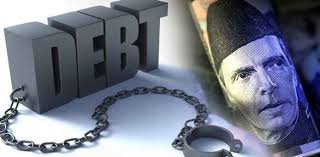
Pakistan’s Finance Division has stated that the country’s public debt burden is expected to gradually decrease over the next three years. However, the economy still faces significant vulnerabilities, including slow economic growth, currency depreciation, and high interest rates.
According to the report “Debt Sustainability Analysis for FY 2026–2028”, if Pakistan encounters a combined macro-fiscal shock, the ratio of Public and Publicly Guaranteed (PPG) debt to GDP could exceed the 70% threshold—posing serious risks to debt sustainability.
Key Forecasts
- Under a stress scenario, the debt-to-GDP ratio may rise from 69.6% in FY26 to 75.3% in FY28.
- Lower-than-expected economic growth, deterioration in the federal primary balance, higher interest rates, and further currency depreciation could significantly raise both debt and Gross Financing Needs (GFN) in the medium term.
- The report emphasizes that the government must adopt a cautious, coordinated approach—reducing non-priority expenditures, improving revenue generation, and extending debt maturities to navigate simultaneous macro-fiscal shocks.
Current Debt Position
- As of June 2025, Pakistan’s total public debt stood at PKR 80.52 trillion, equivalent to 70.8% of GDP, up from the previous year’s PKR 71.24 trillion.
- Domestic debt accounted for 67.7% of the total, while external debt made up 32.3%, largely sourced from concessional bilateral and multilateral lenders.
Debt Structure & Risks
- The average maturity of public debt is expected to remain above six years in the medium term.
- However, short-term external debt constitutes 24% of the total external debt, posing refinancing risks.
- About 41% of Pakistan’s debt is linked to floating interest rates, exposing the country to fluctuations in borrowing costs.
- High interest rates have distorted the structure of domestic debt, with nearly 80% of it tied to floating rates—making it extremely sensitive to further rate hikes.
External Sector Concerns
- External debt currently meets IMF criteria, but any rise in the current account deficit or decline in foreign exchange reserves could jeopardize debt sustainability.
- Stress tests indicate that currency depreciation alone could push the debt-to-GDP ratio from 63.3% to 64.1% by FY28.
Outlook
The Finance Division projects that, under strong fiscal discipline and policy continuity, Pakistan’s total public debt could decline to 60.8% of GDP by FY28, while government guarantees could fall from 3.8% to 2.5%.
However, the report warns that even minor lapses in fiscal management could push the debt-to-GDP ratio back above 70%, undermining sustainability. Slower economic growth, environmental risks, external pressures, changes in the primary balance, and realization of contingent liabilities continue to pose major threats.