In Pakistan, the sectors perceived to suffer the most from corruption are the police, judiciary, and tender/procurement. Public opinion also indicates that provincial governments are viewed as more corrupt than local governments.
This conclusion is drawn from the National Corruption Perception Survey (NCPS) 2025, released today (Tuesday) by Transparency International Pakistan (TIP).
TIP Chairman Justice (Retd.) Zia Pervez said the survey sheds light on multiple issues, including sectors considered most corrupt, factors contributing to corruption, and the performance of anti-corruption institutions according to public opinion. He added that the survey also gauges public perceptions of the government’s anti-corruption efforts, economic stability, and ethical practices in the health sector. Questions related to political funding, whistleblower protection, and transparency in tax-exempt charities show citizens’ concerns regarding transparency and integrity across all areas.
According to NCPS 2025, 77% of respondents are dissatisfied with the government’s anti-corruption efforts. Dissatisfaction by province is: Balochistan 80%, Punjab 78%, Sindh and Khyber Pakhtunkhwa 75% each.
The survey found that 66% of respondents said they were never forced to pay a bribe. Economically, 57% said their purchasing power had declined over the past 12 months, while 43% felt an improvement. However, overall, 58% said the government had stabilized the economy through the IMF program and steps taken to exit FATF.
The NCPS 2025 further revealed that citizens want either a ban or stricter legislation on business funding for political parties and politicians. Nationwide, 42% support a complete ban, while 41% favor legislation.
The survey shows that provincial governments are viewed as more corrupt than local administrations, with 59% expressing distrust—rising to 70% in Punjab. Moreover, 78% of Pakistanis want accountability for anti-corruption bodies like NAB and FIA.
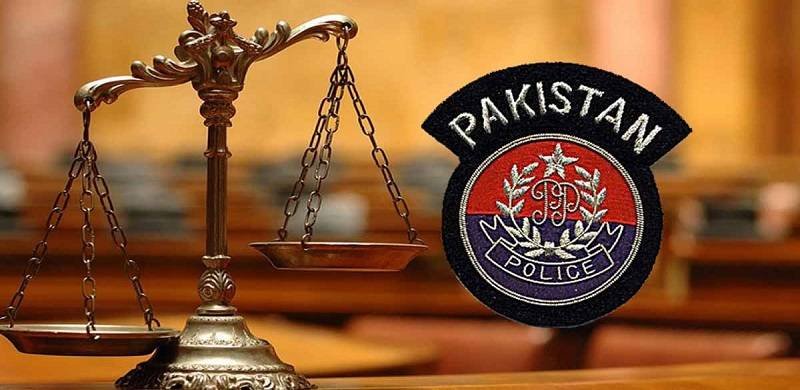
According to public opinion, the most corrupt sector is the police (24%), followed by tender and procurement (16%), and the judiciary (14%). Perceptions of police corruption are highest in Punjab (34%), followed by Balochistan (22%), Sindh (21%), and Khyber Pakhtunkhwa (20%).
Three main factors were identified as fueling corruption: lack of accountability (15%), lack of transparency and access to information (15%), and delays in deciding corruption cases (14%).
Provincial Anti-Corruption Establishments (ACEs) are seen as ineffective—33% deem them completely ineffective and 34% consider them somewhat ineffective. Perceptions of ineffectiveness are highest in Sindh (39%) and Punjab (37%).
The TIP Chairman said the NCPS 2025 does not measure corruption itself, but rather shows how people perceive it in their day-to-day interactions with public institutions. It highlights public trust and indicates where the government needs reforms, transparency measures, and stronger accountability mechanisms.
Meanwhile, Prime Minister Shehbaz Sharif expressed satisfaction with the Transparency International report, saying that the survey shows public appreciation for his government’s efforts to reduce corruption. He said the government is meeting public expectations through economic stability, reforms, and transparency measures, and remains committed to eradicating corruption.