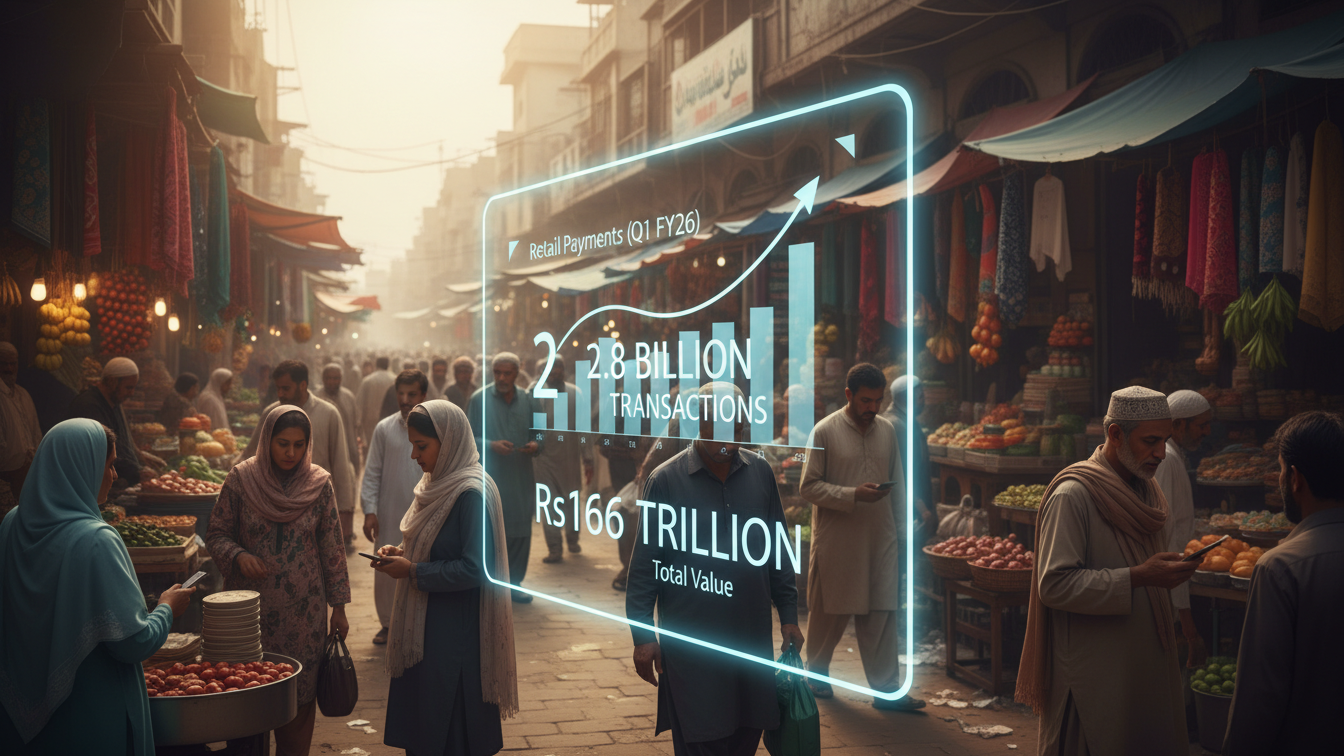
According to sources, Pakistan witnessed a significant acceleration in retail payments during the first quarter of fiscal year 2026, with the number of transactions rising to 2.8 billion, reflecting a 10 percent increase compared to the previous quarter. Meanwhile, the total value of payments grew by 6 percent to Rs166 trillion.
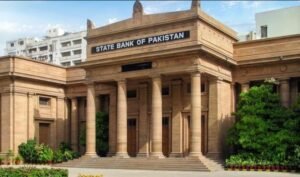
It is noteworthy that the State Bank of Pakistan (SBP) released its quarterly report on payment systems on Tuesday, providing a comprehensive analysis of the country’s existing payment ecosystem, highlighting key emerging trends shaping the payments landscape, and outlining major developments achieved in the sector during the first quarter of FY2025-26.
According to the report, the largest share of retail payments by volume comprised 1,445 million fund transfers, followed by 400 million merchant payments, 353 million bill payments and top-ups, 311 million cash withdrawal transactions through ATMs, bank branches, and agents, and 87 million cash deposit transactions.
In terms of value, fund transfers also dominated retail payments, amounting to Rs123 trillion, followed by cash withdrawals and cash/instrument deposit transactions totaling Rs28 trillion. Fund transfers were conducted through digital channels such as ATMs, mobile banking apps, internet banking, and over-the-counter (OTC) channels, including branchless banking agents and bank branches (via cheques).
Sources said that 2.5 billion transactions were carried out through digital payment channels, accounting for 90 percent of total retail payments, compared to 87 percent in the same quarter last year. The total value of transactions conducted through digital channels reached Rs55 trillion, highlighting their growing adoption in the economy.
Within the digital payments landscape, mobile app–based payments remained dominant, with 2.0 billion transactions conducted through apps provided by banks, branchless banking (BB) providers, and electronic money institutions (EMIs). These transactions accounted for 81 percent of total digital payments, with a combined value of Rs33.7 trillion. This channel was used for a wide range of digital payments, including person-to-person transfers, bill payments, online platform transactions, and account- and wallet-based merchant payments at physical retail outlets.
Meanwhile, internet banking continued to expand gradually as a growing number of users conducted transactions through digital means. Usage of payment cards also increased, with the number of payment cards in circulation rising to 61.3 million, of which 90 percent were debit cards and 4 percent were credit cards.
In addition, the Raast instant payment system maintained strong growth momentum. During the period, the number of person-to-person (P2P) transactions increased to 535 million, representing a 31 percent rise, with a total value of Rs11.3 trillion. Person-to-merchant (P2M) payments under Raast doubled to 4.3 million transactions, with a value of Rs17.0 billion. Overall, 544 million transactions were processed through Raast, with a combined value of Rs12.8 trillion.
According to reports, growth in point-of-sale terminals and e-commerce activity continued, with daily card-based transactions reaching 1.5 million. Across the country, 267 million transactions were carried out through a network of 20,527 ATMs, with a total value of Rs4.5 trillion. On average, each ATM processed 142 transactions per day, with an average transaction amount of Rs16,800.
Alongside ATMs and digital channels, physical touchpoints continued to play an important role in retail payments. Over-the-counter (OTC) services—including cash deposits, withdrawals, fund transfers, and bill payments—were provided through 19,852 bank branches and 756,480 branchless banking agents nationwide.
Bank branches processed 137 million transactions with a total value of Rs110 trillion, while branchless banking agents facilitated 129 million transactions valued at Rs0.9 trillion. Overall, these developments reflect Pakistan’s continued progress toward a more inclusive, efficient, and digitally enabled payment system.